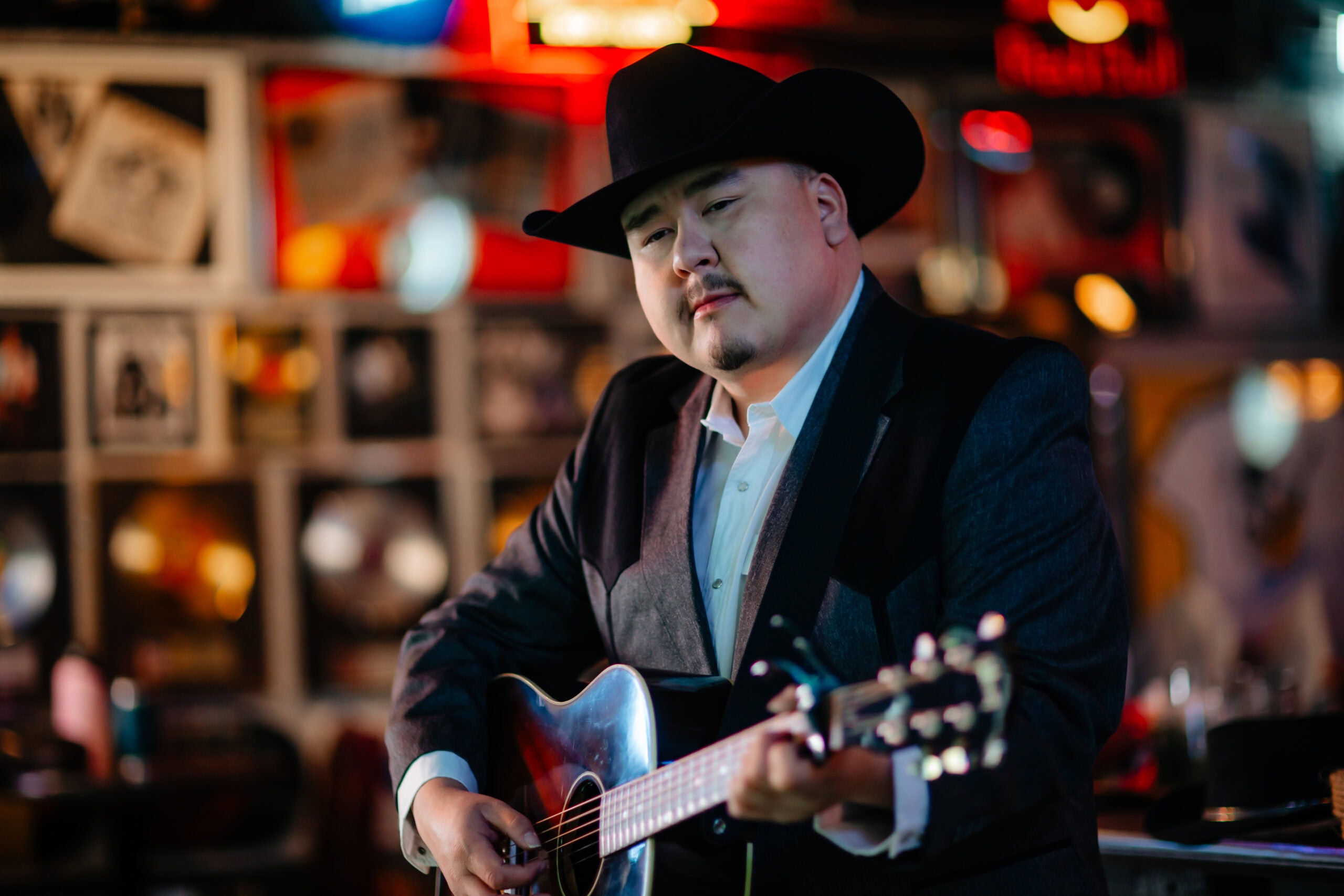
On William Prince‘s latest record, Further from the Country, he aims for undiscovered territory, galaxies away from where he started his long musical trip. He sees the album as a vehicle that can take him that distance.
“It was always my dream, just to sing a song at the Times Change(d) one day,” Prince says over the phone from Winnipeg. “Now we’re selling out the Centennial Concert Hall and playing the Grand Ole Opry.”
But, the singer and songwriter from Peguis First Nation notes, that’s still light-years away from the kind of things he believes are still possible, despite feeling more old-fashioned all the time as labels partner with AI developments and the world’s biggest streaming service makes moves to replace music made by humans with compositions made by robots.
“I’m becoming less and less valuable by the hour,” Prince says. “So now is not the time to be afraid; now is the time to find a vehicle that’s going to propel me further into the atmosphere, into the galaxy I want to be in. And bend the rules of what country music can sound like.”
Of course, the road to the stars, literal or figurative, starts on terra firma. And Prince’s road began back in Peguis with a desire to be like his hero. His dad played the guitar around the family apartment and in the local country gospel band at church. At around seven years old, Prince was watching his old man pick around and got it in his head that he’d learn guitar, too.
“I said, you know, I want to do that—I want to be as good as you, after one day. And I wasn’t,” he says, laughing.
He rented a guitar for a couple months or so, and then passed it off, eventually taking piano lessons. But later, in high school, he bought an electric Hondo, an off-brand Stratocaster, off his best friend Ryan, and started taking some lessons from his dad. Then he discovered guitar tabs.
“That switch kind of clicked, when I was 14,” Prince says. “I was like, ‘Wow, you can just put on a song and jam to it? That’s the whole effing point.’ That’s why we do this—to noodle, to emulate, to play our favourite riffs and sing a song. So once that big sliding door opened up, I was at the school every day, Monday to Friday. I’d print out four or five songs on the inkjet printer they had there, hole punch them, bring them home, and put them in a binder. I amassed this probably 1000-page encyclopedia of all my favourite tabs, courtesy of the Peguis Central High School.”
He started out, then, a little anti-acoustic—”like most young guns, I just wanted to rock, man”—but eventually returned to it because it provided a more meditative learning process that required no plugging in. He learned a lot about playing and performance from sitting in with his dad’s band at church, where there was plenty of work, as they covered wakes and funerals as well, sometimes playing upwards of five hours a night, four to five nights a week.
“It was kind of a dream, because I love it,” Prince says.
“I was bullied a lot, you know. So I didn’t know a lot of kids. But it was interesting, because I would get to know them through their dead grandparents or an aunt or uncle. And then there’s me: ‘Hey, that guy’s in my school, and he’s up on stage with his dad playing all this music for my family now.’ I think it maybe earned me a little bit of favour, but it definitely made me known in the community—‘that young guitar player who picks with his dad’—because we would go to different communities and play all the time. I think that was the most joyful time I’ve ever had playing, because I was so hungry for it. And I just got to spend all that time with him.”
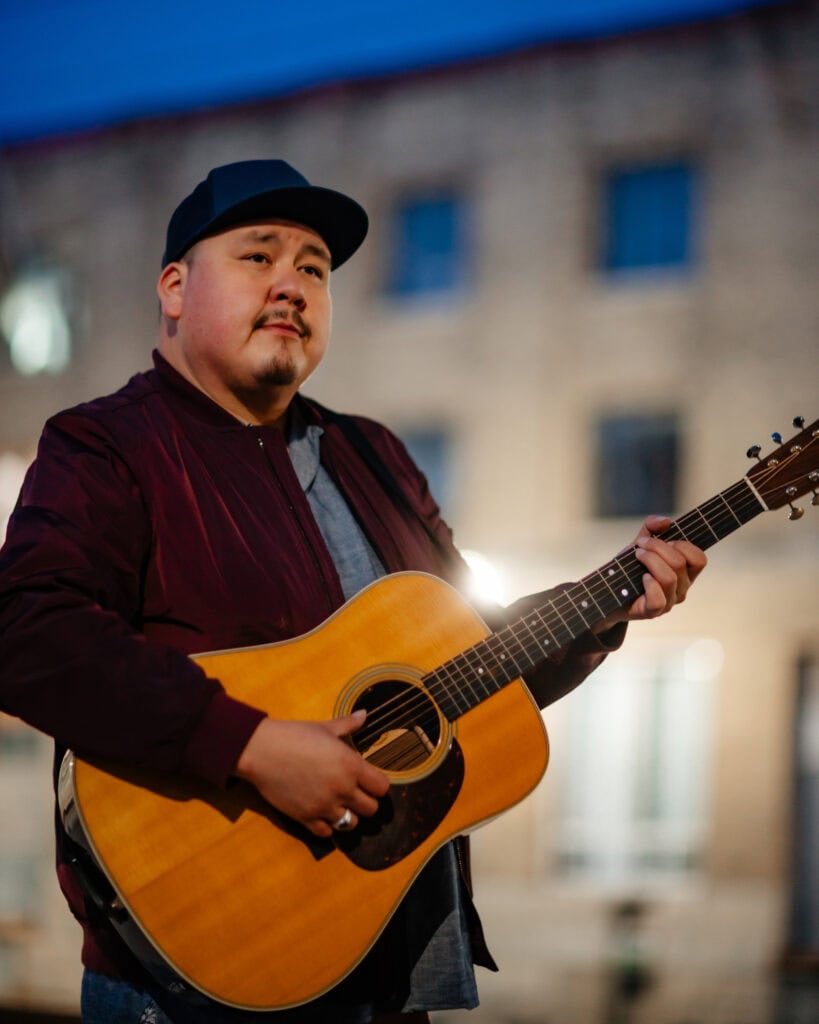
For years, Prince used a $500 Takamine G series acoustic guitar, which he recorded his first album on. That guitar is currently on display at Massey Hall beside his first JUNO Award. But after he got a record deal, he had what he refers to as his “Wayne’s World moment,” when he bought his dream guitar—a Gibson J-45, right off the rack. It’s that guitar that helped him record Reliever, Gospel First Nation, and Stand in the Joy. Now, his go-to guitar, the one “that stays out on a stand,” is a Martin D-28.
“That’s the one I have around the house, the one I can pick up at any moment,” Prince says. “And it sings so well. No better D major chord out there than when you play it on a Martin.”
It sounds like you’re not too precious about specific instruments.
No, they have different uses, for sure, but I’ve written a lot of great things on the D-28 these days. I’m such a big brand guy—Martin, Gibson, Fender, that’s it. All my guitar buddies, they go exploring. A lot of the new record Further from the Country was recorded with an old Stella—I think my guitarist Steven even bought a Stella off Facebook Marketplace during the sessions. Brought it back and played it that day. Austin Parachoniak had a Stella, and that’s what kind of inspired the whole thing. Like, oh, all of a sudden, everybody wants a Stella. Austin can make stick and wire sound like Stevie Ray Vaughan. He’s so talented.
A lot of these pieces are about guitars, and one thing I’ve noticed is that typically, someone who might be considered a bit of a guitar wizard is incredibly specific about their guitar—they seem to sometimes be looking for something they’ll never find, but enjoying the hunt. Songwriters, though, usually seem interested in a workhorse that is completely reliable.
[Those wizards] are like F1 drivers: the seat is molded to fit their back and bottom and everything. Whereas, yeah, just give me an old ’70s Chevy truck that works. The J-45—when you talk about workhorses, that’s the one. It immediately elevates any player. That’s what I wanted, too. I knew that the guitar shines out there and will give you legitimacy amongst those that are legitimate. It’s like, ‘Well, this kid I’ve never heard of has a J-45. Maybe he knows something. Maybe he’s not wasting his own time and his money.’ There’s some nuance, but when you’re down in Nashville, man, and you’re trying to make a name, and you show up with a Taylor single cut, people are like, ‘I don’t know how country this guy is. This might be Jack Johnson instead.’ I picked the guitars that would blend in in the Old West. But I was always drawn to them, because when I was unable to afford these things. I was dreaming about them all the time.
What keeps drawing you to the guitar at this point? Do you still feel like you’re learning?
Definitely. I can chord on a piano, but I’ve yet to even go down that road of writing on one. The guitar, I don’t know… honestly, it’s been with me the longest. So it does feel comforting. If something’s off, it’s kind of like going to the gym. When I pick up the guitar, it’s like, ‘Well, I feel good. I worked out today a little bit. I did something. I tried to write, I tried to invent something.’ It’s all about invention with me. Because I’m not a big theory person. I’m not Noel Gallagher, you know? A lot of my favourite things have been by accident. You just repeat something over and over again, and you find something that sounds cool, and you work that until it becomes something. So I’m still exploring to this day. Every time I pick up the guitar, I’m hopeful something new that I’ve never heard or felt before will be revealed to me.
You have such a gentle way about your playing and vocal delivery—I think a lot of young players starting out feel that loud is the way to get attention, when really that softness draws people in and makes them listen.
Oh, for sure. It had a lot to do with discovering my voice too, this kind of conversational thing. I’m not a big belter, I’m a storyteller. It’s much like we’re talking right now. just a slightly elevated version of that when I’m singing. And I think it’s conducive to a better performance overall, if the guitar is quiet, so that you for sure hear the message. Because people are often left with this feeling of, ‘Wow, I’ve never heard somebody lyric me that way.’ Like you say, when you’re young, you go to an open mic, you think louder is better. But then you start to notice that the people who are only half paying attention to you start talking louder because of that. Then you’re left at max volume with nowhere to go, and you’re just kind of drowning yourself out. So I put it on the audience in the early days, I was like, ‘All right, here I am at this open mic, or this coffee shop or this opener slot, and now we’re bringing this way down.’ And I find that they stay locked in with you after that moment. Leaving yourself somewhere to go is important as well, when you’re just playing one instrument with one voice. Start quiet and build something grander.
Do you pick up your guitar every day?
I’m not afraid to take time from it. I used to be a song-a-day guy, because I didn’t have records out. And the only thing that made me a songwriter or a guitar player was me doing it that day, right? So it was more important for my identity as an artist: ‘I’m an artist, I’m a writer, so every single day, I gotta write to prove that.’ Now the internet talks about me every day, so it’s great, you know? The validation’s there, trophies and tours and posters and tons of things. Now it’s like, ‘You know what? I’m going to focus on being a great husband today. I want to focus on being the best dad this week.’ The guitar stuff, I can always get back to it and warm up real quick in the green room or something when we get there. It’s like a good friend. It hasn’t let me down yet.