Ian Thomas, one of this year’s inductees into the Canadian Songwriters Hall of Fame, released his 19th solo album, How We Roll, in 2024, before spending 2025 with his friends Murray McLauchlan, Marc Jordan, and Cindy Church on their final tour as the band Lunch At Allen’s. The songwriting supergroup released five albums over their 21 years together.
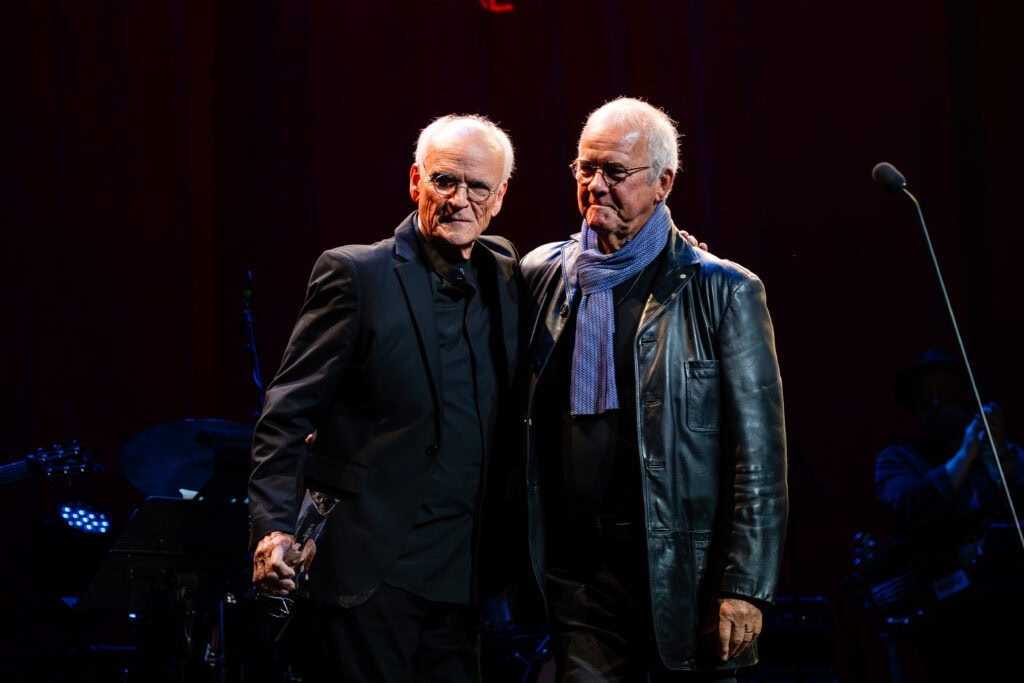
Now, the Juno Award-winning singer-songwriter, who also recorded four albums with the Boomers (1991-2002) and is a successful film composer, tells NMC Amplify, “I feel ridiculous gratitude for having been able to make a living at it.”
His other creative pursuits have included acting — he played Dougie Franklin on the Red Green Show for six seasons — an estimated two thousand voiceovers for commercials, and two books: 2006’s Bequest and 2008’s The Lost Chord.
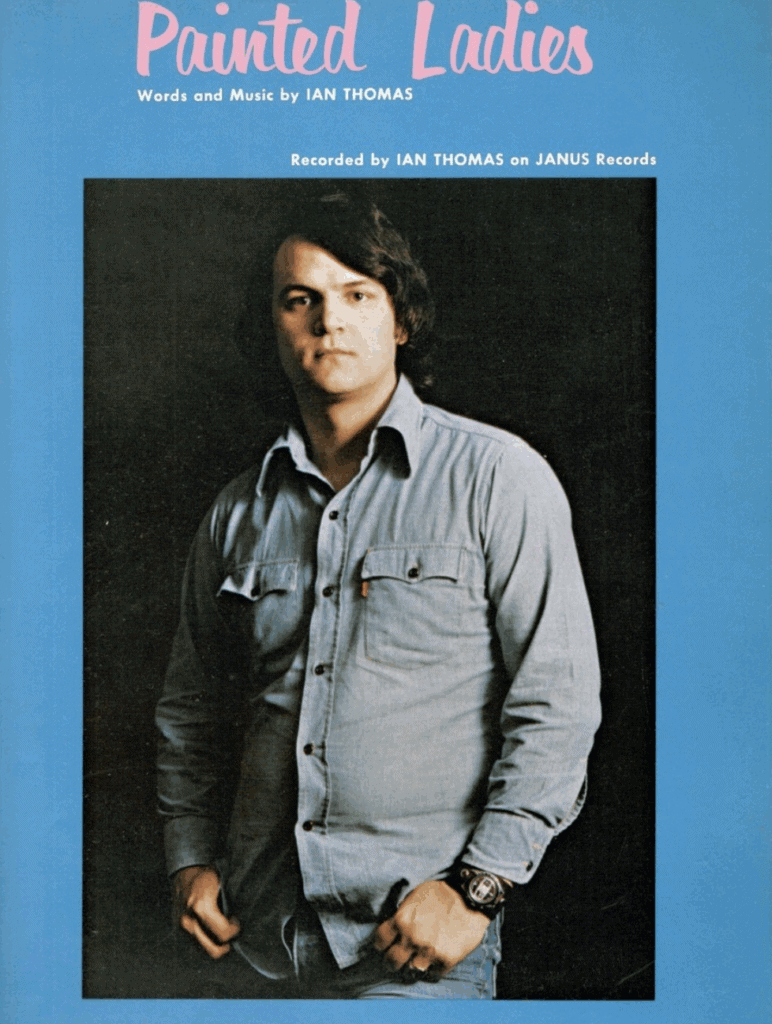
His songs have been covered by an impressive list of names: Chicago (“Chains”), Anne Murray (“Good Again”), Santana (“Hold On”), America (“Right Before Your Eyes”), Manfred Mann (“The Runner”), and Bette Midler (“To Comfort You”). But he can’t think of anyone of note who cut his first international hit, “Painted Ladies,” probably his most well-known song.
“Most of the covers that I’ve heard have been by club bands,” Thomas says. “It’s funny, I don’t know that anybody’s recorded it other than a live performance somewhere. Maybe it’s time-stamped somehow and doesn’t transfer, but a lot of people still are playing it in club bands. And when I hear those versions, it’s lovely because they get the song. Sometimes the chord structures aren’t exactly tickety-boo, but it’s wonderful. It’s every bit as meaningful to me as somebody who made me a lot of money with a big cover.”
Thomas talked with NMC Amplify via Zoom about the origin of the song, which came out in 1973 and landed in the top 40 of Billboard’s Hot 100.
“‘Painted Ladies’ was one of two songs out of the first album that I wrote during the day,” says Thomas, who was working as a producer at CBC at the time. “I had the idea for it at night and scribbled notes down, and then when I picked it up in the morning and I looked at what I’d scribbled down the night before, I went, ‘Whoa.’ It was a great springboard and then it was almost like automatic writing. I couldn’t keep up with the incoming.”
In the song, the Hamilton, Ontario native sets a scene and tells a story, but between the lines it’s inspired by such bygone clubs as Scarborough’s Knob Hill Hotel, where strippers performed in the day and bands played at night. The la-la-la hook lightens it up and almost hides the gritty underbelly of the lyric.
“It was certainly a lyric that most people could sing along to,” he says. “And very often people don’t even know the lyrics.”
I remember setting out just to see what I could see
Streetcars rolling by and airplanes flying high
They all meant nothing to me
No one ever looked my way or knew that I was there
I kept walking and the rain kept raining
Until all the streets were bare
Ooh, I’m feeling fine, mama
Painted ladies and a bottle of wine, mama
Ooh, feeling good, mama
They took my money like I knew they would
City lights were shining on me through my windowpane
I kept thinking ’bout the day when I’d be home again
Rocking chairs and summer fairs and swimming in the sea
I kept drinking, sinking, ’til there was nothing left of me
“The song was strangely autobiographical,” he says. “I was the son of a Baptist minister who became a philosophy professor. So, we lived in that sealed-off dome of academe, and it was always philosophers or the like coming over for dinner, etc. My mother was a musician, a church organist, choir director, so there was music in the house. And then, all of a sudden, when I was in a band, my first band, and we were playing hell holes in Ontario, and sharing dressing rooms with strippers. It was culture shock to me.
“It’s about longing for home because I was madly in love with this girl — still am, after 55 years of being married to her — and there was a melancholy to the song about a strange city, the night lights, etc. and all you really longed for was being home. So it was all very true to my life experience of the shadier sides of nightlife. And so, that ended up as the lyric.”
Thomas says he wrote the song in one sitting on acoustic guitar. He had a Sony TC-630, “a sound-on-sound tape recorder so it allowed me to overdub,” he says. “Once I finished the lyric, I played it all in and sang all the harmony. My daughter was probably two and she would keep running in and yell ‘Boo,’ and then run out again when I was trying to write this song and she just had the silliest giggle.
“When I went to try and get a record deal, Ross Reynolds at GRT had me take my TC-630 in to play them. It had built-in speakers. Ross was just blown away. He signed me on the spot on the basis of that demo I did down in my basement with my daughter running in and out giggling in the background.”
Thomas recorded the song at RCA Studios in Toronto with producer John Lombardo. How John Capek ended up playing clavinet (electric keyboard) on it was just an impromptu decision.
“There was a wonderful jingle writer and arranger by the name of Ben McPeek and he would sometimes leave keyboards after sessions in the studio, and he had left his clavinet in there,” Thomas recounts.
“We were looking for a way to start the song and John Lombardo said, ‘What about this thing?’ So, I called Ben and asked him if we could use his clavinet. He said, ‘Absolutely.’ And so, John Capek, a keyboard player and a good songwriter as well, we all were contributing ideas, the two Johns and me, until eventually we fleshed out this little hook and just sat there proudly. It had an anticipation to it. It was a really interesting and haunting little opener.”
By the time he went to see Reynolds at GRT, he had a whole album’s worth of material, but it was that song that he thinks got him signed.
“I’m glad I didn’t have a record deal,” he says. “I was motivated. When I was producing all of these transcription recordings and live shows at CBC, I could see sometimes where songwriters, their songs, were lacking here or there and that was informative to my own writing. So, in some respects, being a producer educated me not only in writing, but also in engineering and production to the point I had my own studio within a couple of years. So that played a very important role.”