
The sophomore slump is a music business malady. Following a debut that defies expectations — vaulting an artist from dive bars to arenas — the pressure to repeat this overnight success is as intense as what college students feel before final exams. Not so common is when that major-label debut flops. Then, the pressure feels insurmountable.
Lawrence Gowan gets this stress. In 1982, the Canadian songwriter released Gowan on Columbia Records with high hopes. Unfortunately for him — and for the major-label backing him — this self-titled debut caused fewer ripples than a skipped stone in a tsunami. Getting set to record his next record, Gowan knew the stakes. Thankfully, he was confident in the new batch of songs and so was Jeff Burns, his A&R rep, whose track record includes signing successful Canadian bands like Loverboy and Platinum Blonde.
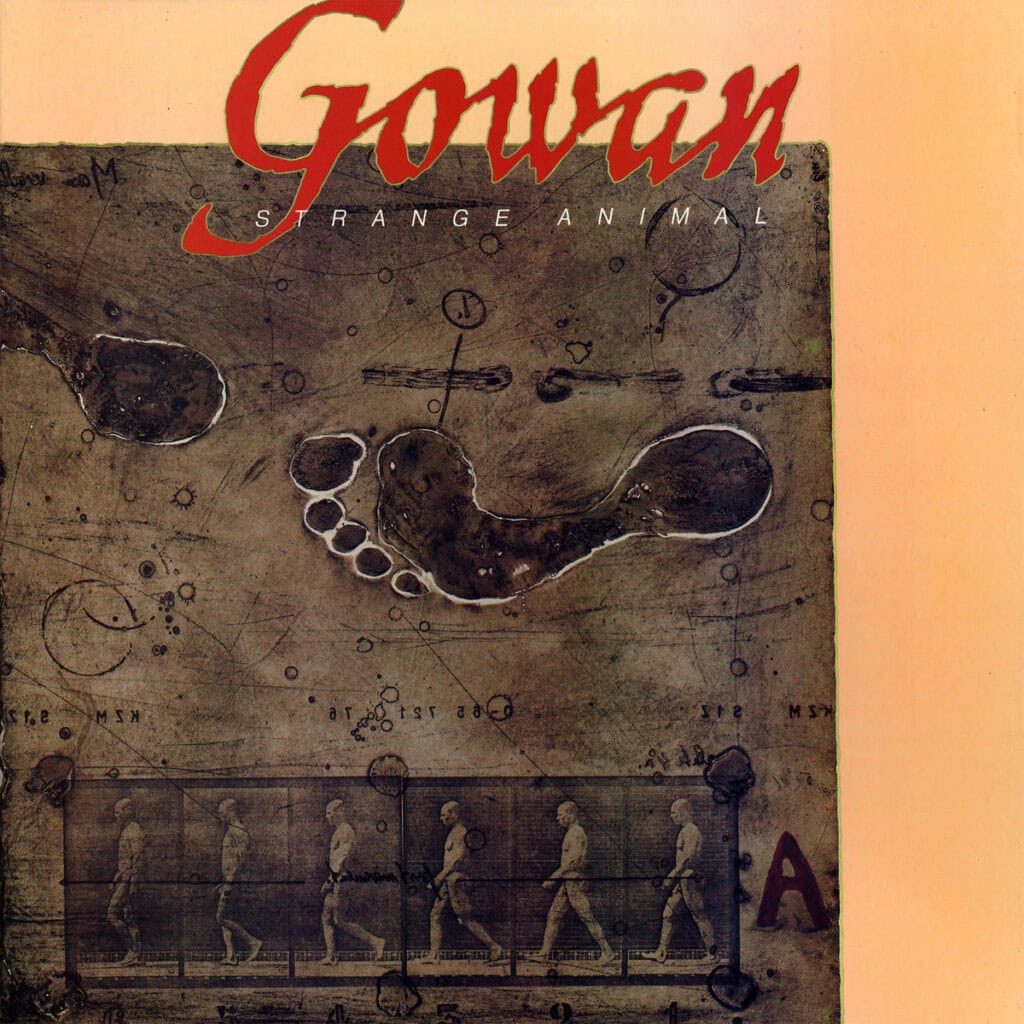
For the latest Record Rewind, NMC Amplify’s David McPherson catches up with Gowan to discuss his sophomore record Strange Animal, which turned 40 in 2025. The album was far from a slump; it was nominated for seven Juno Awards, went triple-platinum in Canada, and featured the classic rock staple “A Criminal Mind,” which was a top five single in Canada, as well as the hit “(You’re A) Strange Animal.” Two weeks after playing a sold-out show at Massey Hall, where Gowan performed the album in its entirety, the 69-year-old reflects on the album — and the single — that changed his life.
Forty years on, I imagine that you’re probably tired of talking about this record?
I don’t think I’ll ever tire of talking about Strange Animal … the only thing I find incredible is that it’s 40 years old and that people know the album top to bottom. I recently played it in its entirety at Massey Hall and it’s amazing how a lot of younger people, who have just recently discovered the record, their favourites are not the ones that were singles — songs like “Keep the Tension On,” “Burning Torches of Hope,” “Walking on Air,” and “City of the Angels.”
After your self-titled Columbia Records debut failed to meet expectations, you entered the studio to make Strange Animal with a lot of pressure from your label. You were confident though, weren’t you, that this new batch of songs would find an audience?
I knew it was going to find an audience because it was just too infectious a record and by the way that every one of the musicians reacted to it in the studio. A big part of the confidence I had with Strange Animal was because we recorded it at Ringo Starr’s house and the fact that he was there during the entire recording. We used all the same equipment — his microphone, piano, everything — that John Lennon made “Imagine” with. By the time we finished making that record, we had been in Ringo’s house for six months. Right towards the end of the sessions, Ringo came into the studio. I was standing just outside the control room and he turned to me and said, “I’ve mentioned to you a few times that your album sounds good, but I want to change that now. It sounds really, really good!”
I’m guessing hearing this five-word compliment from one of the Fab Four gave you yet another shot of confidence and added to the feeling you left England with — that Strange Animal would find a far greater audience than your debut?
Yeah. We arrived at Ringo’s house on February 7, 1984 — exactly 20 years to the day after the Beatles’ American invasion. When I reflect on that time, I had confidence that that record was going to find an audience. I didn’t know how big an audience, but I just knew that people were going to resonate with this record. And, 40 years later, to see the sold-out audience at Massey Hall, all on their feet, with big smiles on their faces and with their arms in the air, was a reminder that this record, like many of the ones that came out in the classic-rock era, really had something we never expected them to have, and that’s longevity.
How did you end up at the English manor of rock royalty in the first place and secure Peter Gabriel’s rhythm section of Jerry Marotta, Tony Levin, and David Rhodes as your studio band?
I was at a Peter Gabriel concert in Toronto and my A&R guy, Jeff Burns, who was confident that I was still going to be a success, was at the show with me. He told me that the sound guy on that tour, David Tickle, would be a good producer for my next record and I agreed because I really liked the Split Enz record Tickle had done. During the show, I also realized that the members of Gabriel’s band were just the right kind of players I needed to render my new songs properly. After the show, I gave David [Tickle] a demo tape of my new songs.
I’m guessing Tickle was impressed enough that he eventually agreed to produce what became Strange Animal, but how did Gabriel’s bandmates become part of the package?
Oddly enough, about a month later, David was playing the Strange Animal demos in his car back home in England where Peter [Gabriel] was touring and Tony Levin and Jerry Marotta were in the car with him. David called me from his car phone and those guys got on the phone and told me they also really liked my demo and that if I wanted them to play on my record, they would do it at the end of their current tour with Peter. David then added that Ringo Starr had recently moved back to England and had bought the house that John Lennon used to live in, Tittenhurst Park, and Ringo wanted David to reassemble the studio Lennon had, so he said we could make the record there.
Initially, you must have thought Tickle was joking and that they were pranking you?
For a moment, yes, I thought it was a crank call. But, after I spoke to Jerry and Tony, I realized, that it was no joke. The night I arrived, Ringo answered the door and over the next six months we made Strange Animal. We could only record from noon until 8 pm at the latest because Ringo wanted the house quiet at night, so it took a while to make that record. I was there until early July, and Ringo, occasionally popped in, usually every two or three days, to comment on what we were working on. It was a phenomenal atmosphere to be in the middle of and making that record.
Did you arrive at Startling Studios, Tittenhurst Park, with all of the songs for Strange Animal written?
Yeah, they were all done. I had even mapped out the drum and bass lines, but the studio musicians augmented those parts…they took my black and white sketches and brought them into full living colour.
Do you have any favourites of these “sketches” that were brought to life in Ringo’s house?
It’s impossible to pick just one, but probably “A Criminal Mind,” because whenever I play it live, I always tell people I never hear the fourth note [he proceeds to walk over to his piano and illustrate what he means by playing the unmistakable opening melody to this hit] because before I get to the high A, the audience explodes. That’s just an odd little thing that I enjoy to this day. Another one that was a Top 20 song, but not as successful, that I love is “Guerilla Soldier.” That one goes over tremendously well whenever I play it live. It’s so gratifying when I look into the audience and see a 17-year-old singing that song at the top of their lungs.
Back to “A Criminal Mind,” the song that became a classic-rock staple and a top five hit in Canada. Where were you when you wrote that memorable opening melody on the piano?
I was in my parents’ basement in Scarborough. I had that opening melody and I had also sculpted out the rest of the basic melody and the chorus of the song, but I did not know what the lyrics were going to be. Then, about two days later, I was at the Canadian National Exhibition and the Canadian government had an exhibit that featured an actual jail cell from the Kingston Penitentiary. There was nobody paying attention to this exhibit, but the curator was there and I walked over to him and struck up a conversation. He had just recently retired after working at the penitentiary for 35 years. Over the course of the conversation — and it was the first time I’d heard someone use the word recidivist — he told me how he saw so many people over the years that they’ll be out jail for two years, back in for three, and then out for one, and back in for five.
I was intrigued by it all and he told me that if I really wanted to get a feel for what it was like to be a prisoner for me to step inside the cell, which I did. I sat down on the bed and he closed the metal cell door. The moment after, he paused, looked at me, and said, ‘Feels different now, doesn’t it?’ And, it really did. It’s an odd thing, but you really are caged and this is your life, inside these few square feet. Immediately, I thought that that whole conversation would fit with that melody I had written.
I’m guessing that the story and the lyrics for “A Criminal Mind” arrived not long after this visit to the CNE?
Yes, the very next morning. It was one of those things where all the words just fell in line with that melody and with that chorus. I remember my younger brother coming home for lunch from school and I played it for him. He told me that it was the best song I had ever written.
Your brother was bang on, wasn’t he?
Yeah, literally! Six months later, when the record came out, that song was a gold single within the first three weeks, which, at the time, was the fastest Columbia Records had ever had a single go gold. It was astounding.
The video, which won Best Video of the Year at the 1985 Juno Awards, released along with the single before the record dropped, also helped spike sales and increase interest in, not just the song, but the album?
Definitely. Columbia gave me free rein for that video. They said, ‘Just don’t make it too dark and heavy … try to make it like “Batman” from the 1960s’ and that is what I did. I created the initial storyboard where I turned myself into a cartoon character and that made it far more palatable for television. The video rocketed up to the top within two weeks and the song was a gold single within three weeks. Columbia then released Strange Animal and it was platinum [sales of more than 100,000 units] within a month. All these dominoes that had been falling the wrong way for me, suddenly fell the right way.
In many ways, the success of this video epitomizes how video really did kill the radio star?
Definitely. Honestly, at that point in late 1984 and early 1985, if your song wasn’t on television, it wasn’t on the radio. In making that video, we got the right director, Rob Quartly, who was extremely great to work with and open to my ideas…everyone threw all of their talents into that video. When it came out, it was groundbreaking and I’ll tell you just how groundbreaking. A-ha had just released “Take On Me,” to radio four months before and the song had completely bombed. I was at MuchMusic talking to the VJ about “A Criminal Mind,” and he told me that there was a director in the studio filming a video for A-ha’s song and that he was inspired by the video for “A Criminal Mind.” When the video for “Take On Me” was released, that song completely took off. I always like to make the distinction that our video came out first.
Any final thoughts on Strange Animal 40 years on and how this record set the course for the rest of your career and the success that followed?
That record changed my life. For every musician, there’s your life prior to having hits, which can be very rich and rewarding in a lot of ways, because music is at the centre of your existence, but there is also a lot of trepidation that it could all disappear quickly. But, once you’ve had a hit, and if you’re lucky enough to have several hits, you know that you’ve connected with a number of people out there that will always relate to these songs. Funny enough, at the time, I didn’t think of it that way. I thought, ‘Maybe I’ll be able to hang on to these folks for the next couple of years until the next record comes out and hopefully I can do it again.’ You really are on that kind of a treadmill at that point in your career. But, once you realize that these songs have connected with a generation of people, then you’re hopeful that you’re going to be able to do this for a long time. It’s amazing to me that these songs have done that now for multi-generations. To live long enough — and be able to play long enough — to witness that firsthand, it’s just the greatest prize at the end of the rainbow.
Record Fast Facts:
Released: February 1985
Label: CBS Records
Recorded: Startling Studios (Tittenhurst Park) in Sunninghill, England
Mixed: Startling Studios and Trident Studios, London, England
Producer: David Tickle
Band: Larry Gowan (vocal, piano, synths, mouth organ); Jerry Marotta (drums); Tony Levin (bass, stick); Chris Jarrett (guitar); David Rhodes (guitar)
Singles and Peak Position: “A Criminal Mind” (5); “(You’re a) Strange Animal” (15); “Guerilla Soldier” (40); “Cosmetics” (41)
Sales: Triple-platinum in Canada for sales of more than 300,000 copies
Junos: Seven nominations, including Album of the Year and Single of the Year, and two wins, Best Video for “A Criminal Mind” and Best Album Graphics
Tracks:
- A Criminal Mind
- Cosmetics
- Desperate
- City of the Angels
- Walking on Air
- Burning Torches of Hope
- Keep the Tension On
- Guerilla Soldier
- (You’re A) Strange Animal