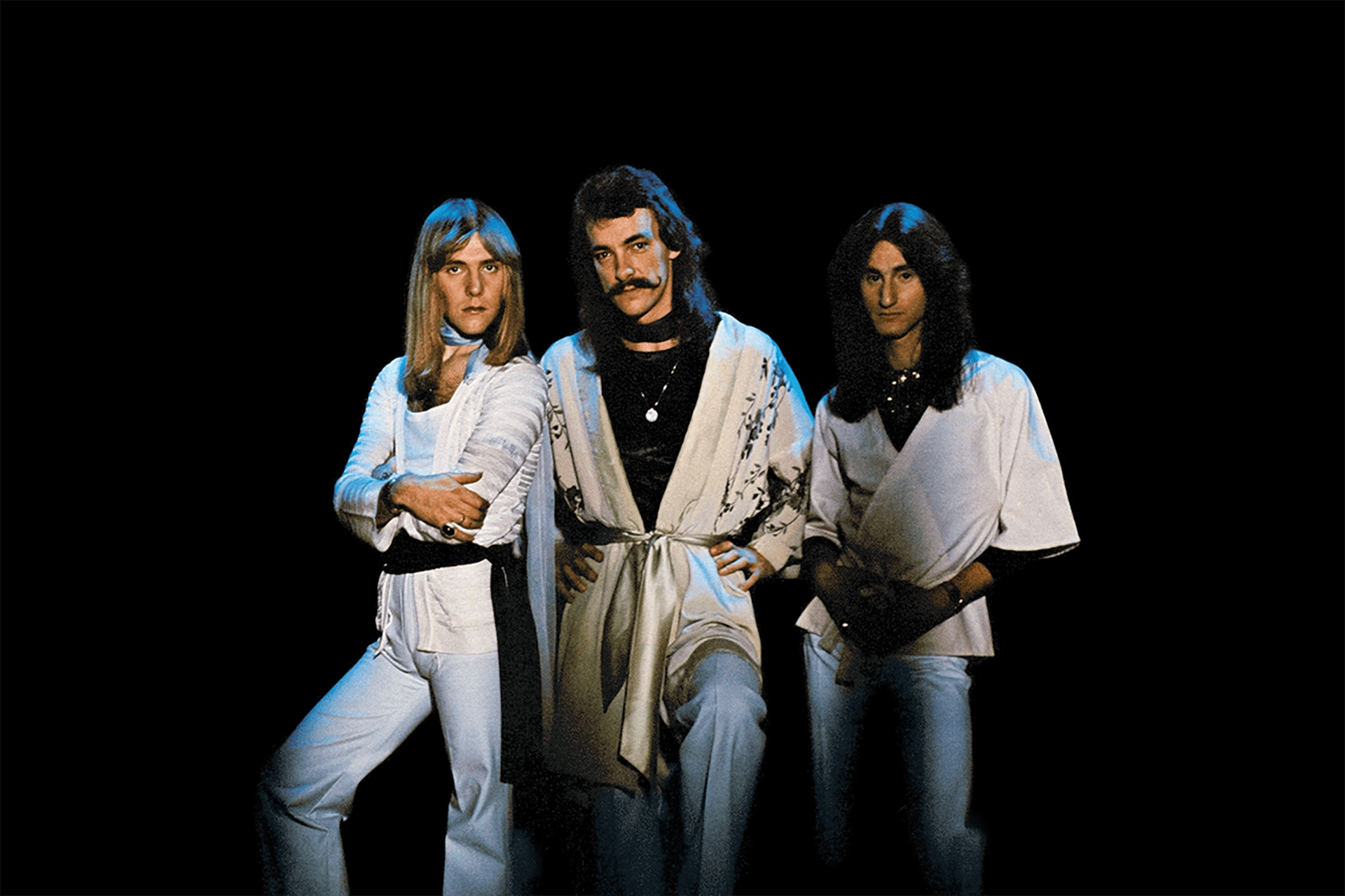
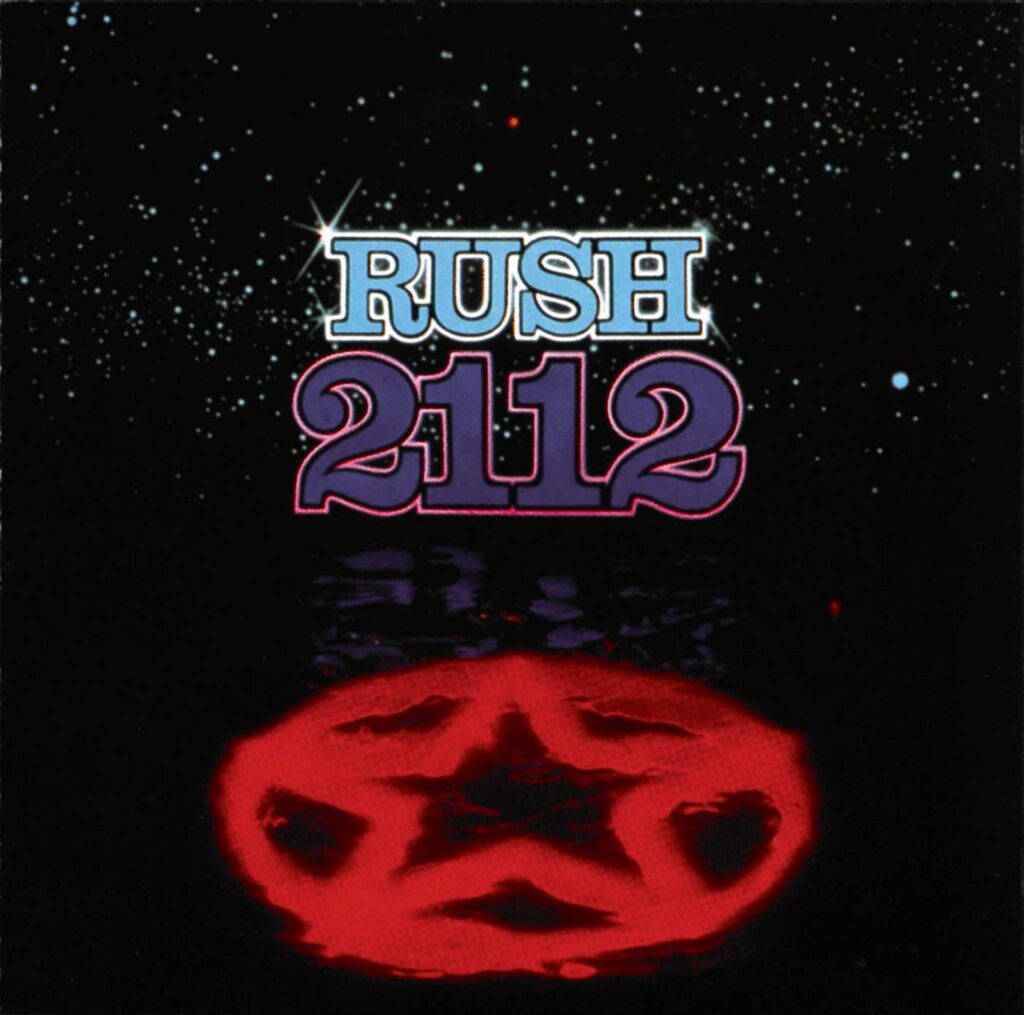
Talk about a rush. From the moment the needle hits the grooves on 2112 and the sonic sounds explode from the speakers, this fourth studio effort from Toronto power trio Rush is a dopamine hit.
This prog-rock masterpiece and concept record marked by lyrics derived from Neil Peart’s imagination, and inspired by the drummer’s infatuation, circa the mid-1970s, with writer Ayn Rand and her philosophy of objectivism, is combined with textured melodies and symphonic explorations to create one of the band’s best.
With Rush recently opening the Junos with drummer Anika Nilles and hitting the road this June on a 58-date world tour—the first in 11 years and the first without Neil Peart—the latest Record Rewind rewinds the clock, or in this case, takes a trip to the future, to commemorate the 50th anniversary of a record that changed the trajectory of the band’s career. The idiom “third time’s a charm” does not apply; following their self-titled debut and the next pair of records, Fly By Night and Caress of Steel, which did not make a dent on the charts, the band’s fourth album was a deep dive into the world of progressive rock that resonated widely—with audiences and critics alike.
Giving Mercury the Middle Finger
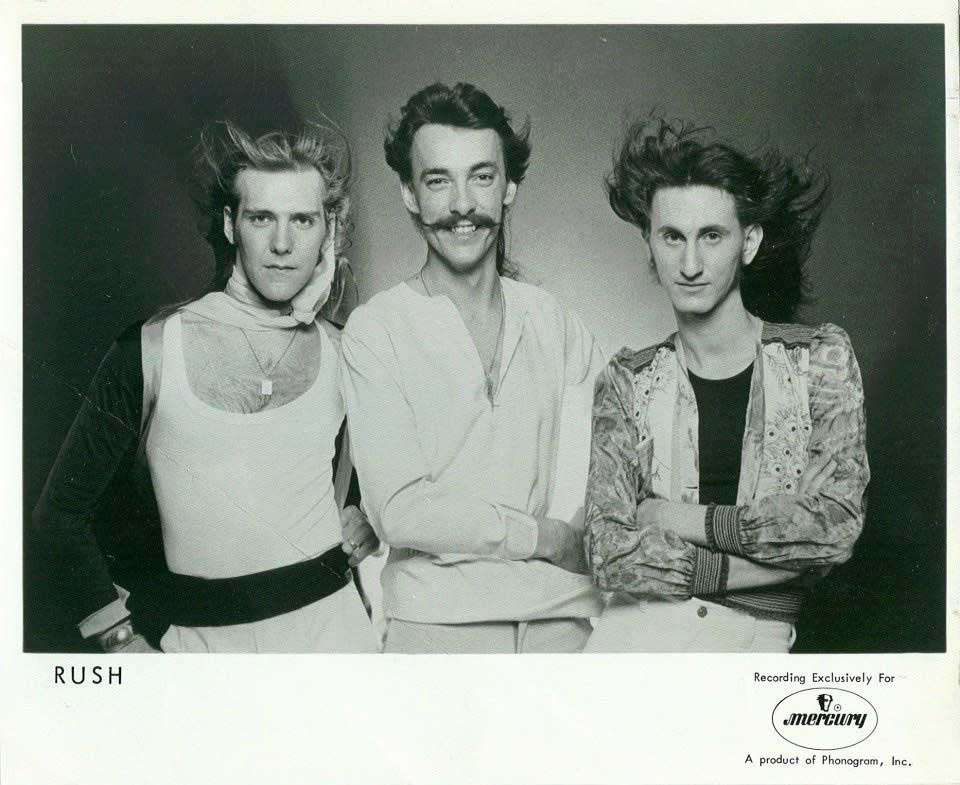
Take a band battling with their record label over that age-old industry euphemism, “creative differences”—trying to strike a balance between following one’s muse and delivering masters that are commercially viable, along with a drummer’s obsession and a band’s angst—and you understand the situation Rush faced heading into the studio to make 2112. Mercury Records was far from happy and were even considering severing ties with the Canadian group. The label wanted singles and sales and the timeline to produce hits was now. Defying the odds by tapping into the zeitgeist and their collective ire at this situation, somehow this dystopian album found an audience and satisfied both parties. The album reached No. 5 on the Canadian charts and No. 61 in the United States. After Moving Pictures, it is the band’s second-highest-selling album.
When U.K. monthly music magazine Mojo interviewed Geddy Lee in 2016 to celebrate the 40th anniversary of 2112, the band’s bassist and lead singer explained the quandary Rush faced in 1976: “Our record company Mercury had told us in no uncertain terms that we were a huge disappointment to them. They had signed us on the basis of our first record (Rush, 1974), which was pretty straightforward hard rock. But we loved all those English progressive rock bands—Yes and Genesis—and on our third album Caress of Steel we had a song that was 20 minutes, ‘The Fountain Of Lamneth.’ Mercury was like, ‘What the fuck? Who are you guys?’ And even we thought that: who are we? Caress of Steel had bombed. The gigs were half-empty. We named it the ‘Down The Tubes Tour’.”
“We joked about Neil (Peart, drummer) going back into the farm equipment business, and Alex (Lifeson, guitar) and I going back to painting movie theatres. When we started on 2112, we thought this would probably be the last record we make. So we were like: fuck you, Mercury. If we’re going to go out, we’ll go out doing our crazy shit, not failing at what you want us to be.”
This middle finger to Mercury and the gamble paid off. While reviews were mixed, overall writers lauded the record. The Ottawa Citizen’s Bill Provick wrote that “2112 is not a masterpiece of acid rock, but a carefully crafted work of fine heavy substance at a time when rock seems all too preoccupied with pop schlock and disco dullness. San Pedro’s The News-Pilot said, “If you like to crank up the volume to a slugfest of hard rock, then here’s the album to do it with.” Not everyone loved the record’s concept. Jim Shaw in the Shreveport Times called the plot “one expansive cliché,” and advised the band “to leave this type of composition to other groups capable of producing original pieces, e.g. Emerson, Lake and Palmer’s ‘Karn Evil 9, 3rd Impression.’”
A Tale of Two Sides
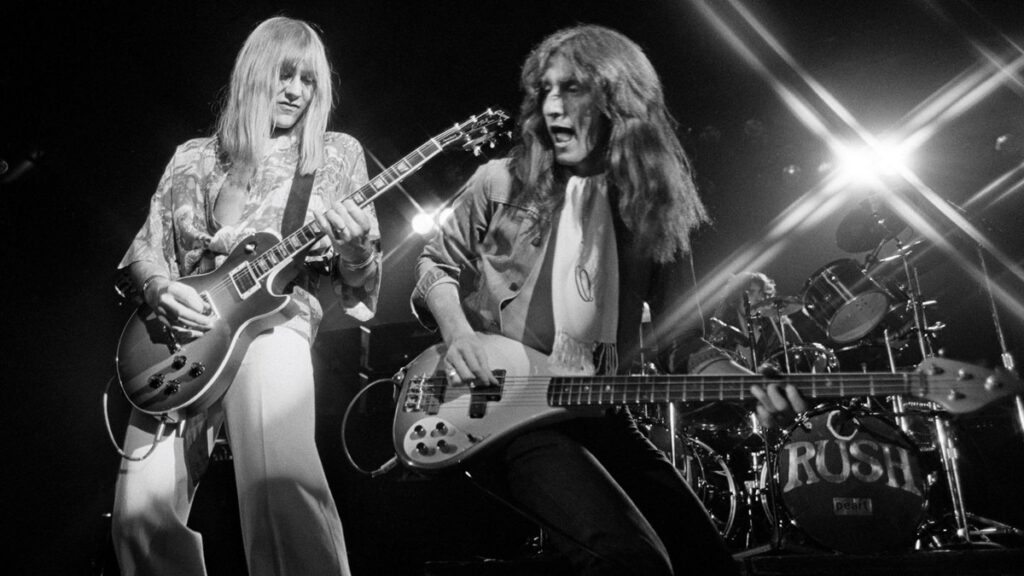
Side one of 2112 is a rock opus: one song, 20 minutes long, in seven parts, that tells the story of a rebel in an oppressed futuristic Orwellian world, ruled by high priests in “the Temples of Syrinx,” where music and freedom of choice are outlawed. Side two features five songs and leans more toward hard-rock, but is no less of a sonic assault.
Peart’s inspiration for this dystopian tale came from his deep reading of Rand and objectivism, a philosophy that she once described as “the concept of man as a heroic being, with his own happiness as the moral purpose of his life, with productive achievement as his noblest activity, and reason as his only absolute.”
The hero in 2112 is a nameless protagonist who represents the themes of individualism and free will throughout this song cycle. The listener is dropped in the middle of an Orwellian world; this land of conformity is apparent from the first words sung:
We’ve taken care of everything
The words you read, the songs you sing
The pictures that give pleasure to your eye
One for all and all for one
Work together
Common sons
Never need to wonder how or why.
Peart penned the bulk of the lyrics in a span of six months while the band was on the road finishing the Caress of Steel tour. The album opens with the epic “Overture/Temples of Syrinx” that features melodies far sweeter than any treats delivered by the Easter Bunny.
A decade ago, to celebrate the 40th anniversary, a deluxe reissue featured unreleased material, along with covers and interpretations of the music from contemporary artists the band had influenced such as Foo Fighters, Billy Talent, and Alice in Chains.
2112 was a record of firsts. The album marked the band’s breakthrough in the U.S. market. In the RPM Magazine cover story on April 24, 1976, Boyd Tattrie wrote, “It seems the only music market that hasn’t made superstars of any Canadian performers is FM-oriented, progressive hard rock. Rush’s new album, 2112, should see the band with a good position in the international “heavy-metal heap,” so far untouched by a Canadian group.”
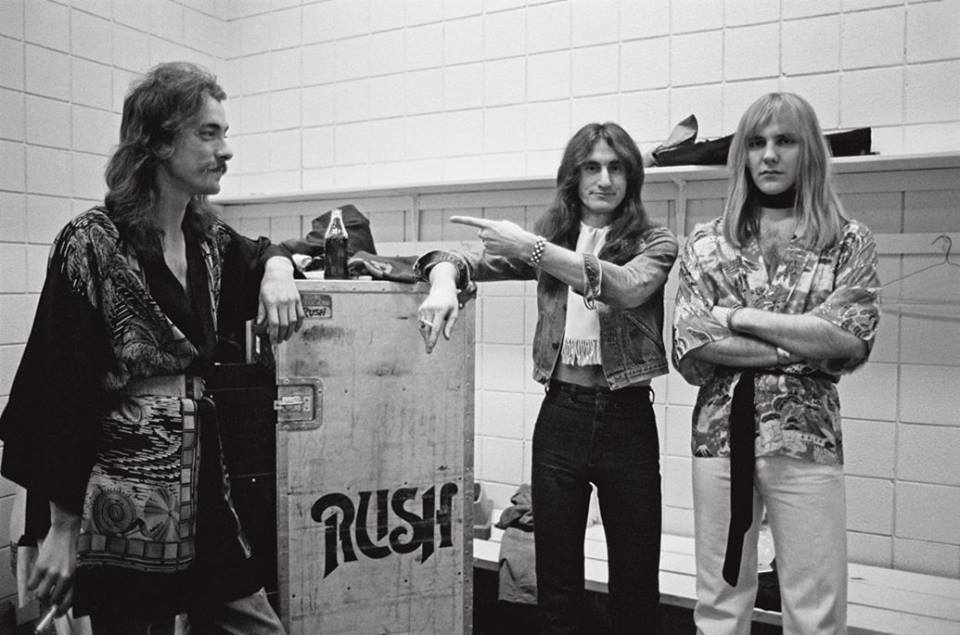
In Martin Popoff’s book “Rush Album by Album,” Metallica’s Kirk Hammett reveals that 2112 was the first Rush album he ever heard. He was 13 years old and discovered this record at a friend’s house one afternoon, who prefaced the placing of the needle down on side one by saying, “This is my favorite band. They are way better than UFO.” The guitarist was blown away right from the opening notes and says that the opening song, “Temples of Syrinx” taught him how to adapt basic riffs to various beats.
In 2006, the Audio-Visual Preservation Trust of Canada chose 2112 as one of the albums that are culturally significant and should be preserved. This scribe agrees.
Fast Facts:
Album: 2112
Label: Mercury Records
Release Date: March 1976
Studio: Toronto Sound Studios
Producer/Engineer/Mixer: Terry Brown
Sales: 3× Platinum certification (more than 3 million copies in the U.S. alone)
Billboard charts: No. 5 in Canada and No. 61 in the U.S. (the band’s first Billboard Top 100 album)
Awards: Polaris Heritage Prize Audience Award (2018) in the 1976-1985 category.
Tracks:
1. Something for Nothing
2. 2112: Overture/ Temples of
3. Syrinx/Discovery
4. A Passage to Bangkok
5. The Twilight Zone
6. Lessons
7. Tears