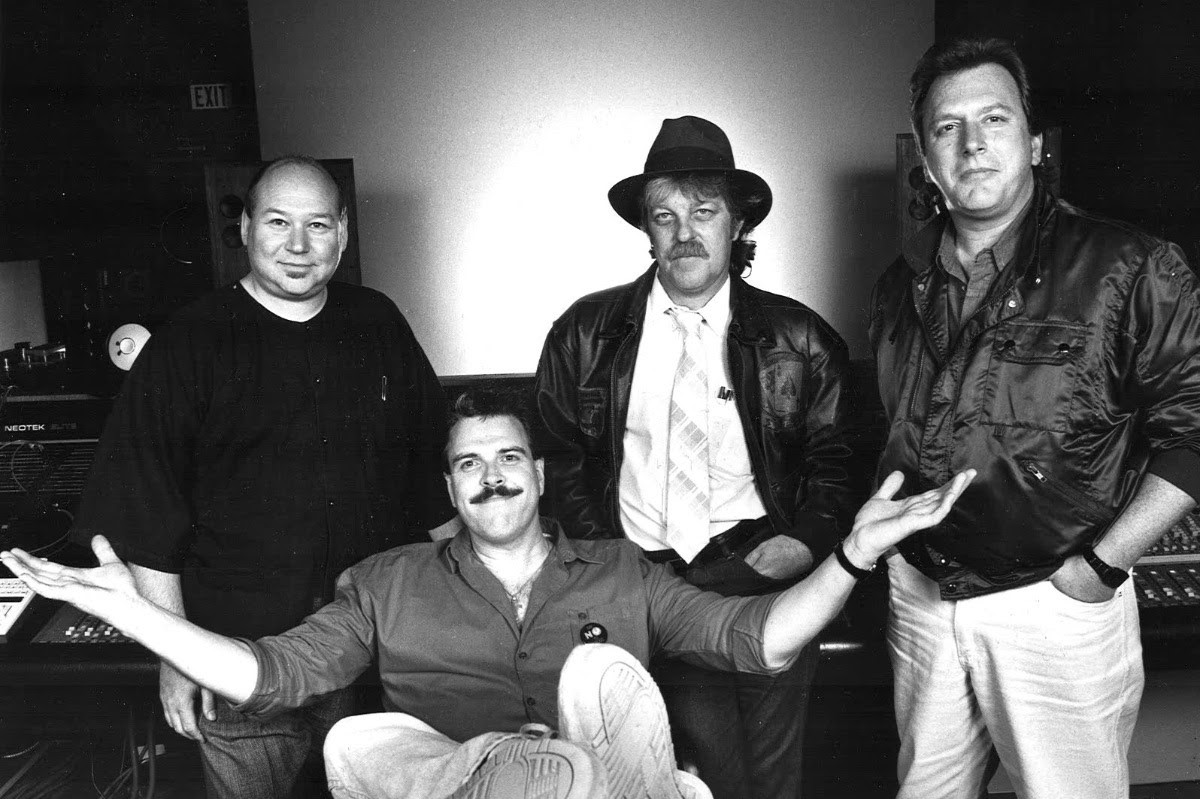
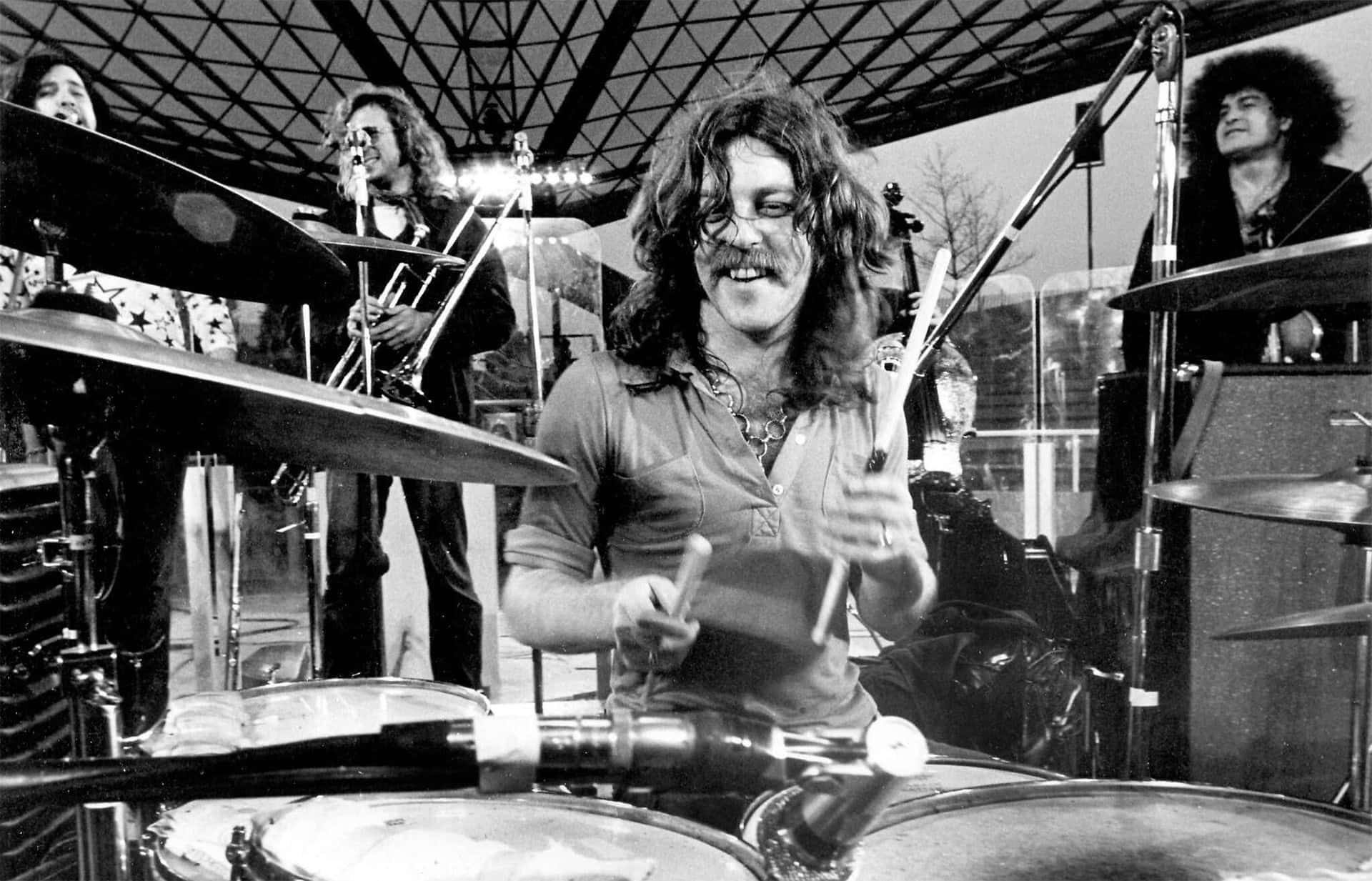
Editor’s note: All quotations from Skip Prokop are from interviews conducted by Bob Mersereau between 2007 and 2014.
You do all the hard work. You practice and practice, get in your 10,000 hours, and become an expert on your instrument. You play the dives and the empty clubs, pay your dues and then some. Finally, you get your big break, your one chance where the right people can hear you. Stardom is next.
And what happens? Disaster strikes. Nothing you did wrong, but in a brief moment, all those years of hard work go down the drain. You had your shot, and now it’s gone.
Most people couldn’t get past that. But not Hamilton, Ont. drummer Skip Prokop. He didn’t just survive one career-killing disaster — in just over a year, he made it through three separate catastrophes. Anyone else would have felt cursed. Instead, Prokop not only soldiered on, but he also used those experiences to his advantage and formed one of Canada’s biggest groups of the 1970s.
Prokop had learned to play drums in the Sea Cadets in Hamilton and was then chosen for the Royal Canadian Naval Band. He spent his 10,000 hours practicing every paradiddle and ratamacue in the 40 drumming rudiments and was a technically superb player by age 16. Then he discovered rock ‘n’ roll.
He formed psychedelic-rock band The Paupers (formerly The Spats) in 1965, which became one of the most popular groups in Toronto’s burgeoning Yorkville Village music scene. By the next year, they were packing clubs such as the El Patio and Boris’s Red Gas Room. They had a feisty young manager, Bernie Finkelstein, who had his eyes on bigger things and was looking for a higher-profile gig for the band.
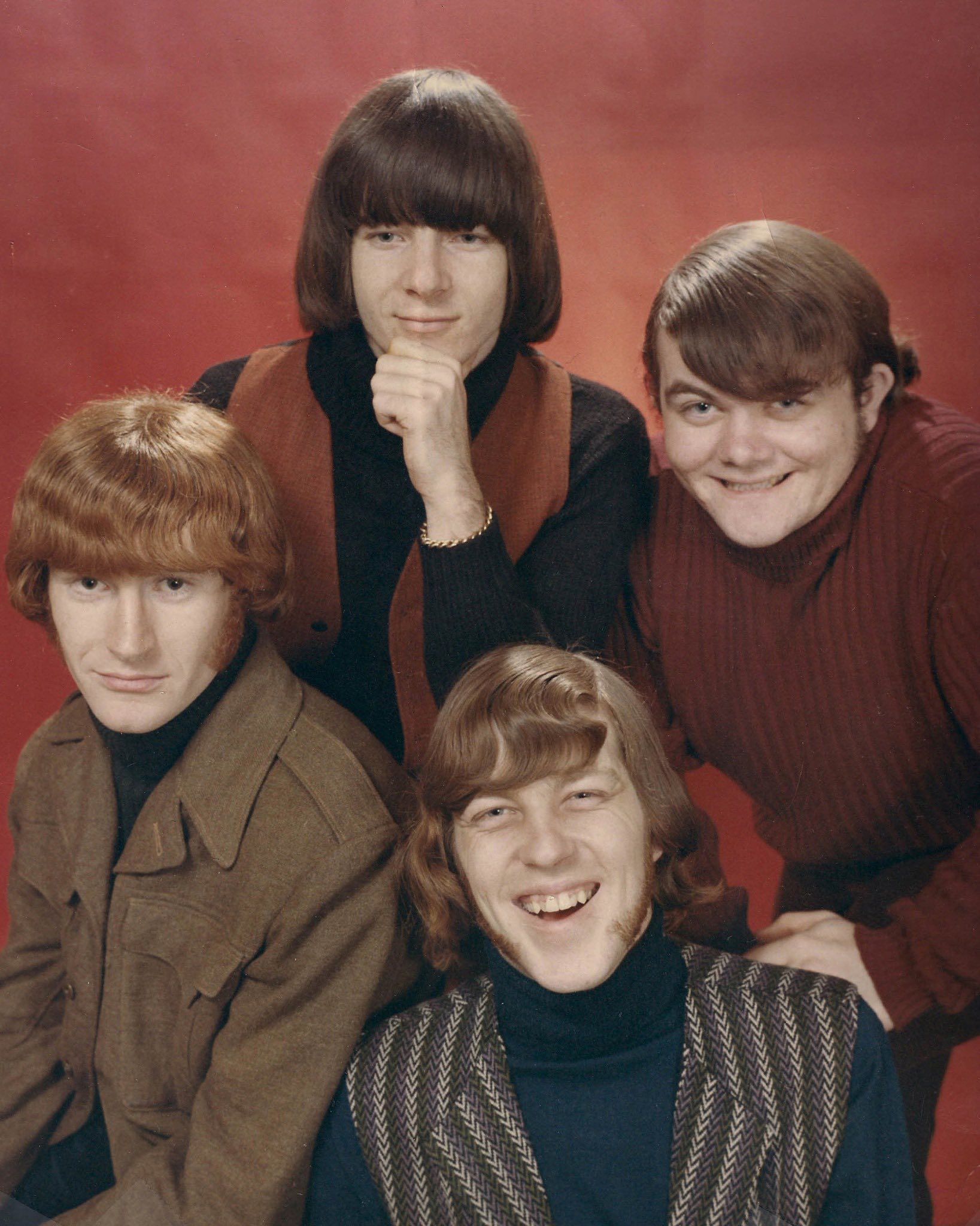
“Bernie went down to New York and talked to Howard Solomon at the Cafe Au Go Go, and said, ‘We’ve got this great band up there, blah-de-blah-blah, we’d love to come down and open for one of your groups.’ Howard said yes, so they picked some dates, and it was locked in,” said Prokop.
In the spring of 1967, they were set to be the opening act for some shows featuring a hot new San Francisco band playing their first East Coast shows.
“That band was Jefferson Airplane,” said Prokop. “We went in the first day and did the sound check, and the place just exploded. The staff was putting their trays down, going, ‘Who are these guys?’ They’d never seen anything like it.
“We played that night, and the place goes berserk, packed and berserk. They won’t let us off the stage. Here’s the Airplane standing backstage, going, ‘What the hell’s going on?’ We had to play three or four encores, and we ran out of material. By the next night, everybody who was anybody in the music industry, in the upper echelon of management, recording, and booking agents, was at the Cafe Au Go Go. The word went out that this band was not to be believed, you’ve got to see it, and that place was jammed. That included Brian Epstein, Albert Grossman, and all the people from William Morris; it was crazy. Albert tracked Bernie down in the crowd and said, ‘Why don’t you come over to the office and have a chat?’”
So, Bernie went there the next day, and meanwhile, we got wined and dined all over New York by agencies, this guy and that guy; it was really crazy. And the end of that story is, we got the first U.S. record deal, through Albert Grossman, with Verve Forecast. That was really celebrated up here by all the Canadian bands, going ‘Wow, great!’ Guys were calling Bernie, going, ‘Can you go down and get us a deal?’ Historically, it really opened the door for Canadian bands; they looked and went, ‘Wow, there’s actually talent up there, they’re not all chasing raccoons or something.’”
So far, so great. Buzz for the band began to build across North America, and by that summer, The Paupers were chosen to play at the very first rock festival in Monterey, California. That Summer of Love gathering would prove to be one of the most important moments in the history of pop music, making stars of several artists and setting the tone for the future of rock ‘n’ roll. The buzz band leading up to the festival was none other than The Paupers, with plenty of industry hype and newspaper write-ups calling them the band to watch.
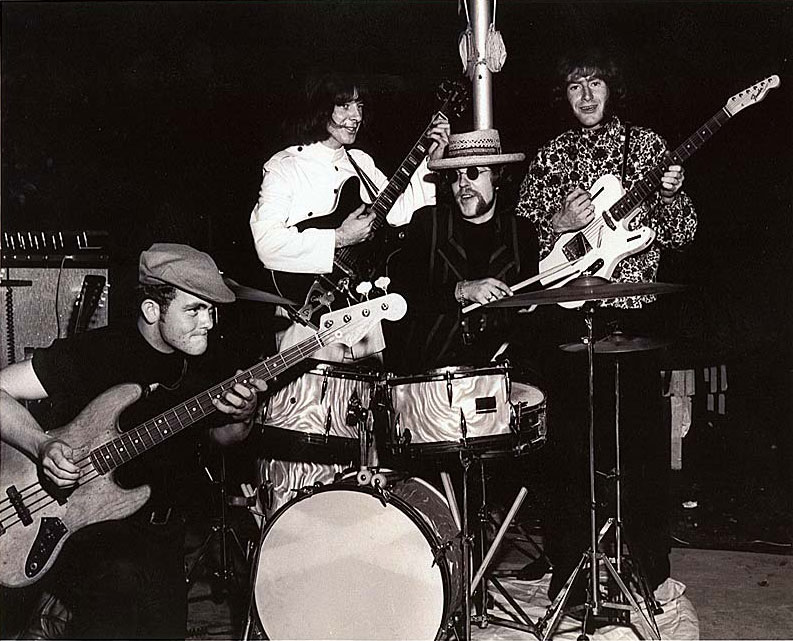
“Everybody was there, everybody wanted to see The Paupers,” said Prokop. “We were being predicted as the band that would walk away with that festival, we would be one of the biggest acts in the world. Long story short, we got on stage, Denny [Gerrard] is stoned on acid, he tunes his bass about a quarter-note sharp or flat, and it sounds awful. Just before I’m counting in the first song, and he’s tuning his bass! I’m going, ‘Oh… my…. God.’ So we started to play, the big, big drum thing and all that. All of a sudden, there was a crackling and weird crap going on with the amps. By the second song, the tape had broken on the Echolette [echo effects machine]. So instead of it sounding like thunder from God coming down upon everybody, it was ‘wee-waw, wee-waw.’ There was no echo at all. Then Denny’s amp blows up. Then Chuck’s amp blows up. That left me on acoustic drums, Adam with a rhythm guitar and vocals. It was hugely disappointing. And that was it.”
The Monterey International Pop Festival made stars of Janis Joplin, Jimi Hendrix, and even Ravi Shankar, but nobody remembers The Paupers. That was pretty much it for the group. They struggled along for a few more months, but then Prokop informed Grossman he was pulling the plug. But instead of parting ways, the well-connected Grossman had already worked out an exit strategy for Prokop, with another of his famous clients.
Prokop said Grossman told him, “You gotta keep very, very quiet about this, but Janis [Joplin] is leaving Big Brother. I want you to go out to California, hang out, play with her, whatever, start building this relationship. Because Skip, you put great bands together, and I know that you’ll put a sensational band together for her.”
The plan all along was for Prokop to be the drummer in this new group for one of the hottest stars in 1968. He was in demand again, playing on the album The Live Adventures of Mike Bloomfield and Al Kooper, jamming with friends Steve Miller and Carlos Santana, and getting to know Janis. Once again, it seemed Prokop was getting his big break.
Cue disaster number two: “I started to talk to Janis about the people I was looking at for the band, and fully intended to start looking for a house, start looking for schools for the kids in San Francisco. And all of a sudden, she said, ‘I want to keep Sammy [Andrew], my guitarist, from Big Brother.’ And I said, ‘What? In my opinion, I don’t think he’s the guy we want.’ ‘Well, I want him,’ she said. So her and I got into a real bone of contention over that.”
Joplin wouldn’t budge, and Prokop walked away. At least, he thought, he had another good thing going. But you guessed it — disaster number three.
The Mamas and the Papas had broken up earlier in the year, and Mama Cass was embarking on a solo career. Her big solo debut was planned for Caesars Palace in Las Vegas for three weeks of shows in October of 1968. It was no simple pop show; she had a full orchestra with her, she hired Prokop on drums.
There was tremendous interest and excitement for the show, and the opening night was sold out, with celebrities such as Liza Minnelli and Sammy Davis Jr. in the house. But all was not well backstage. Cass Elliot was in rough shape. She’d been sick, had missed almost all of the rehearsals, and was losing her voice. Despite being advised to cancel, she went on stage but could barely sing. The first show was a total failure, and the second performance wasn’t much better. The crowds were disappointed, the reviews were terrible, and the show closed after one night.
Prokop packed up his drums, got on a plane, and headed home to Toronto. After just over a year in the U.S., he’d been so close, but now, he had no gig, no band, and nothing in the works.
However, something about the rehearsals on the Vegas stage had inspired him. It was different than rock ‘n’ roll and reminded him of playing drums in his old drum corps days.
“We had a seven-piece band, and two or three singers, and then, where I was sitting on the riser, my back was to a great talent, Jimmy Haskell, a composer-arranger-conductor from L.A. He was conducting a 56-piece orchestra. So not only am I playing with the rock element of the band, I’m playing with a 56-piece orchestra. It was unbelievable. There’s such power in a big sound like that. I thought it would be amazing if you put a band together that had a rock nucleus, it would have brass, and an electric string quartet, which would allow you to do anything you wanted in the studio and reproduce it on stage. So that was the whole idea.”
The idea for something new. He’d already met another Toronto resident named Paul Hoffert, a keyboardist, and they talked some more.
“I said, ‘Paul, I have this really, really great idea. I’m thinking of putting a really big band together, like a full brass quartet, a full string quartet, a full rock quartet, probably a lead singer.’ He said, ‘Are you serious?’ I said, ‘It would be incredible, we could play whatever we wanted, we could play jazz, rock, classical, fuse them together, do whatever we wanted.’ He said, ‘Gee, Skip, if you ever decide to do it, call me.’ I was home for less than 24 hours from Vegas, and the next day I was in his living room, with the plans to put Lighthouse together.”
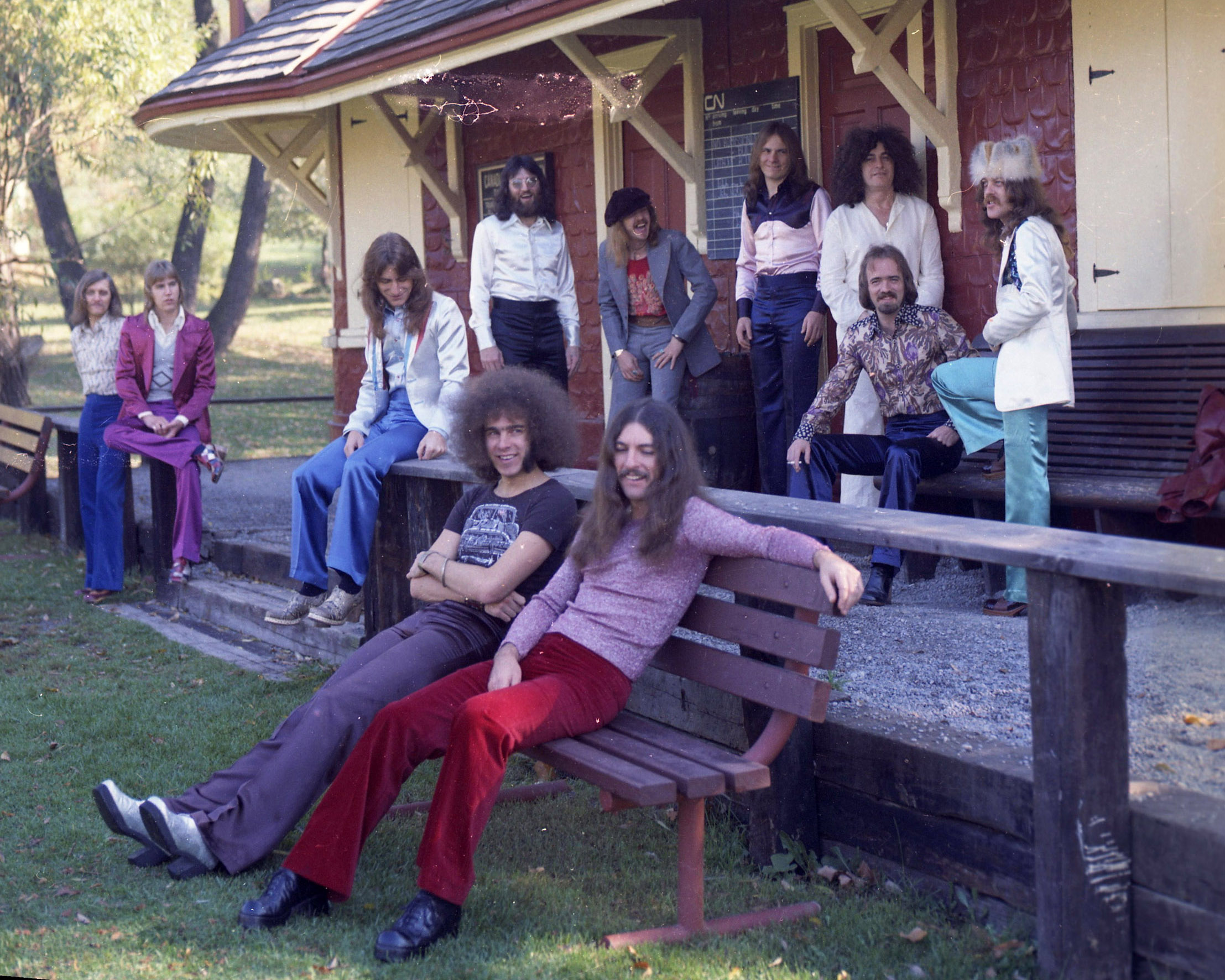
Lighthouse was definitely not a disaster. The band became one of the biggest groups ever to come out of Canada, with huge festival appearances and Top 40 smashes, including “One Fine Morning” and “Sunny Days,” and was the first Canadian group to be awarded a Platinum album in the U.S. for Lighthouse Live.
When Prokop was chasing dreams in the U.S., it brought him disaster after disaster, and it wasn’t until he came back to Canada that everything finally came together with the success of Lighthouse.
He left the group in 1975 and moved on to a career in advertising and music production, but was lured back to the band for several reunions. In 1992, the group came back together full-time. Prokop played with them until he retired in 2016, and he passed away the following year, leaving behind a legacy as one of Canada’s most influential drummers.
In 2022, Skip Prokop, Paul Hoffert, Ralph Cole, and Bob McBride were inducted into the Canadian Songwriters Hall of Fame for their work in Lighthouse. Hoffert still leads the band, with several shows scheduled for 2026.