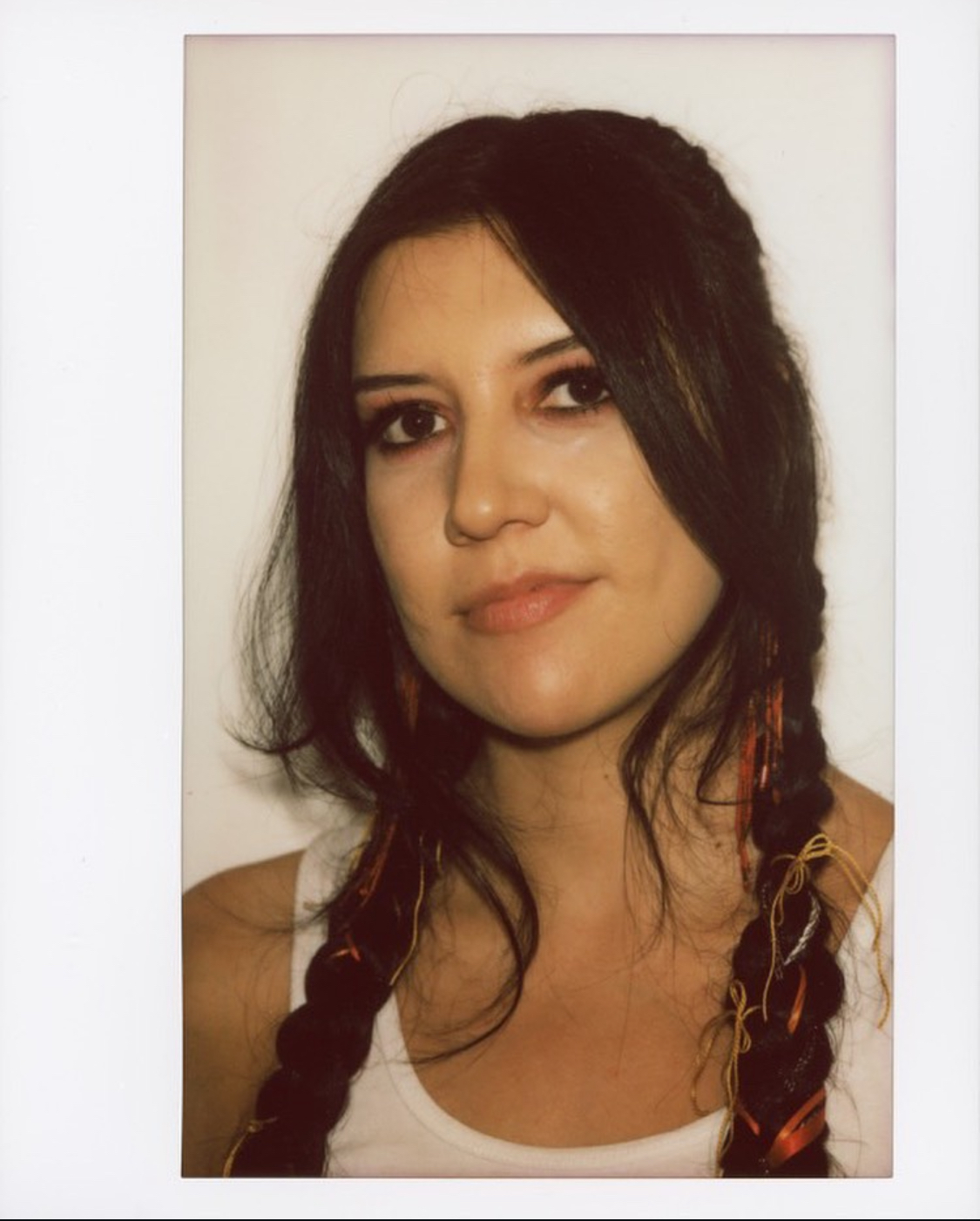
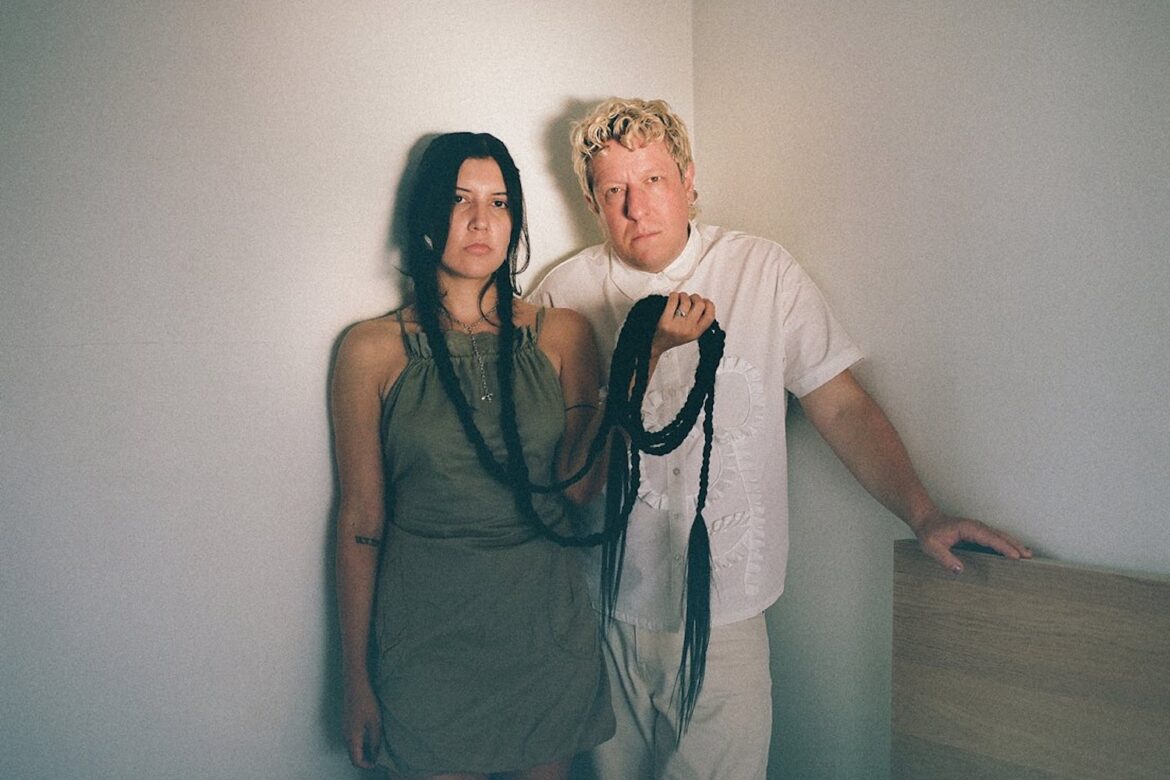
Near the end of Montreal-based band Ribbon Skirt’s 2025 debut full-length, Bite Down, singer Tashiina Buswa’s voice starts to get more and more altered. You start hearing it dipped in auto-tune on the sludgy “41” and then by “Earth Eater,” the album’s nightmarish closing tune, it’s melting and expanding via a liquid layer of reverb. Their next release, Pensacola (also 2025), begins with Buswa in even more distorted form on the grinding “Lucky8” and, though the grit never returns to the same degree, the vocal alteration itself persists throughout the rest of the EP. Studio magic makes it happen for the recorded songs, but as Buswa says over the phone, they were seeking a way to control all of that during their live show, and not leave it in the hands of a new sound tech at every gig.
“Sometimes we have sound techs that ask, ‘Can I just control the vocal effects on my end?’ and every single time we’re like, ‘Absolutely not,'” Buswa says with a laugh. Not in a mean way or anything, but the songs just wouldn’t be the same without us applying these effects in the specific way we envisioned when we wrote the songs. It really does change the whole sonic world of the songs in a way that’s important for us to maintain.”
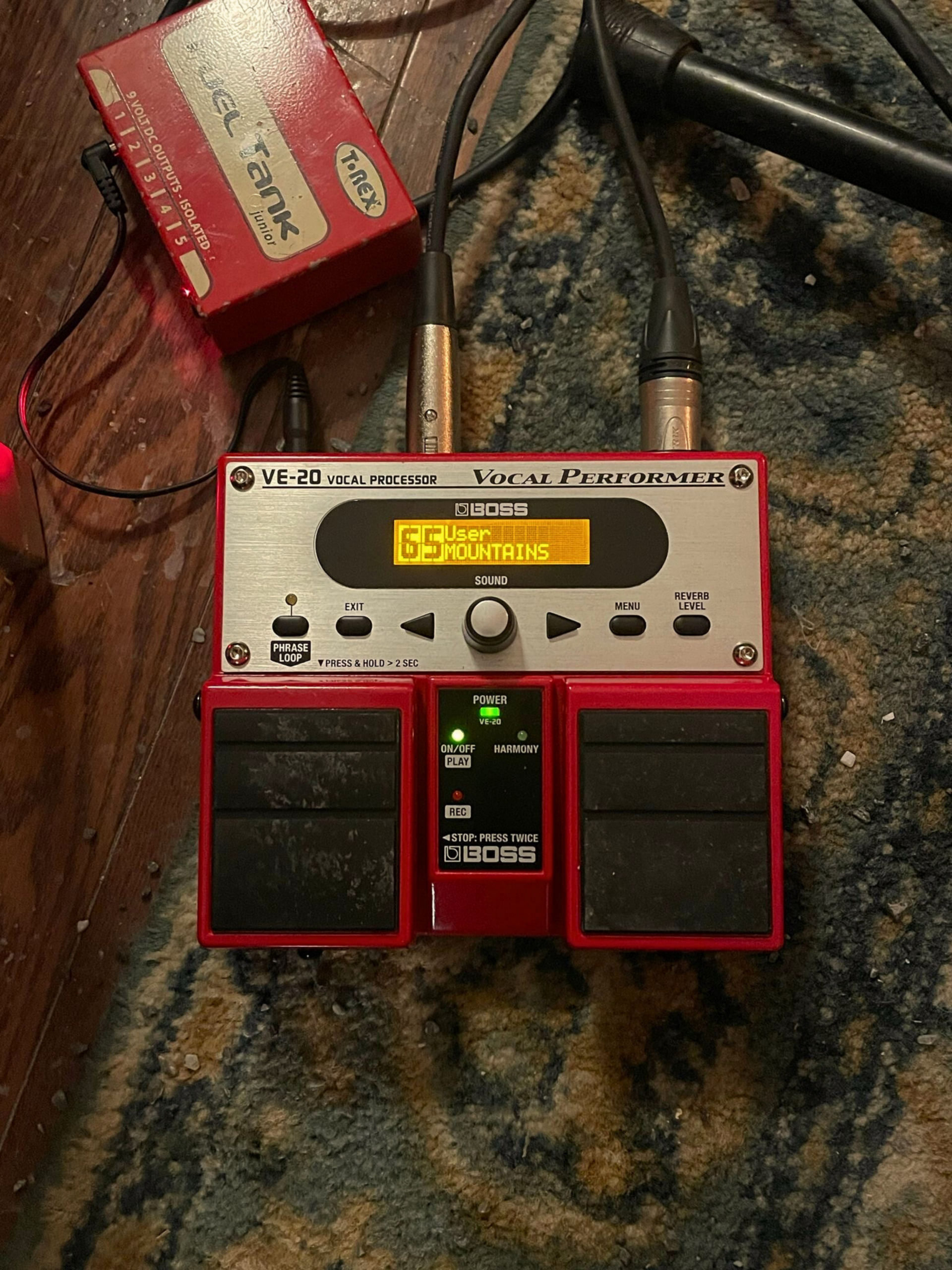
The band was able to create the super blown-out vocals Buswa wanted for Pensacola’s “Lucky8” in the studio, but translating it to a live setting was a more difficult trip, as sound techs hate upping the distortion on vocals. So Buswa took the vocal effects pedal, a Boss VE-20, to her friends Monty and Rena (“proper audio people,” Buswa says), and they fiddled with the device until they got it to work in a way that makes everyone happy.
“I don’t even know what they did, but they got it to a really good place with the gain staging, and now when we use that distortion preset live, it doesn’t feedback, it isn’t so much that it’s at a point where it sounds fucked,” she says. “I’m very happy with the ultimate result of it. We were not gonna do that song without that effect again. Because that’s how the song sounds.”
Buswa is dealing with a different kind of vocal alteration while on the call—the one brought about by allergies from a blossoming Montreal summer. In the same sense that a sudden change in the way one speaks can alter their understanding and expression of self, I’m curious about whether using the vocal effects pedal has contributed to an expansion of self-expression or even liberation from self via a rejuvenated approach to performance. For example; auto-tune or vocal distortion allowing for a kaleidoscopic understanding of herself or giving her the chance to inhabit, with a heightened acknowledgement of the performance itself, a different kind of being completely.
“I don’t like just hearing my voice as it is at any given time,” she says. “I love hearing how different effects change it, and all the little inflections and weird things an effect can add to a vocal part is really interesting to me. That’s almost as important as the part itself—just sung with my voice. I think it lends itself to these really interesting, creative.. I don’t know. The finished product is always so interesting for me to sit back and look at, and be like, “Damn, I would have never thought that would be possible.” And it wouldn’t be possible with just my own voice, I guess. It’s been a funny journey. Obviously I want my voice to cut and shine through the mix, and people don’t always hear my actual timbre, but at the same time, I’m so obsessed with trying new things.”
How does the feeling or idea that you want to express affect the way you use the pedal and your voice?
I use a heavy delay effect on the vocals for “Earth Eater,” and the meat of that song lyrically refers to a bunch of core memories I have, including some traumatic ones. It’s also about recurring nightmares I’ve had my whole life, so to be able to access that dream space, I really felt the vocals had to also be detached and almost drowned, sounding like they were going to be lost any second. For the live show, we really drowned the vocals in delay. It really contributes to that feeling of searching for something through a dream, or remembering things that have happened, but trying to push them away at the same time. There’s no way to explain that to a sound tech at sound check. We’ve also been experimenting a little bit with auto tune in a live setting, but it’s very much an experiment still. Some of the vocals, we gain them up a lot more to have this harsh and needly effect, almost more to cut through the mix of the whole band, but also to convey a sense of urgency and emergency, because some of the songs are very in your face. Then, of course, we use a distortion effect as well for some songs, which I think is maybe more stylistic, but lends itself to the narrative we’re trying to tell on stage. The record is a narrative that has a beginning and an ending, so I think we always try to emulate that on stage, and I think the effects really lend themselves to it.
Do you consider the vocal pedal when you’re actually writing a song, or always determining what a song needs in that sense after it’s written?
I think that it’s more of the latter, although lately it’s been interesting writing songs in real time. Billy and I, we just write in real time together, it’s very collaborative. I don’t know why I’ve been doing this, but lately when we’ve been writing together and I’m singing and he’s playing guitar, I’ve set the vocal pedal to be on the auto-tune setting, and I think that something about that allows me a certain freedom. It’s still my voice but it’s not quite my voice, and because it’s not quite my voice, it lets me access this other portal of creative freedom. I just notice I feel more creative when I’m using the auto-tune when we’re writing, as opposed to singing with dry vocals. I don’t know if it’s the little inflections, but something about that has been a really interesting journey. Definitely did not used to write like that. But also, certainly while writing, I’m kind of recognizing pretty early on what the vocals will need later, and like already combing through the options in my head, knowing what the options are already on the pedal, and trying to almost pre-create a sound in my mind before the song is even fully finished.
Have you investigated what makes you so excited to alter your voice?
I think it’s less about excitement and more about the desire to not stay static. I haven’t really thought about this ever, but maybe to some degree it’s to escape myself a little bit. Because I think, to be quite vulnerable, I feel like I have imposter syndrome still when it comes to music, and I think maybe—I actually don’t know, I’m just thinking totally out loud—it’s just a desire for the act of expansion, and maybe that is something I’m subconsciously trying to do to make up for my perceived lack of skill. I really do have a lot of anxiety about holding my own alongside my bandmates who are all so, so freaking talented, proper capital ‘M’ musicians. They all know so much about pedals and tone and have such a deep understanding of that stuff that I don’t, so maybe part of it is also to keep learning, and maybe through learning in this way I get closer to them or closer to a place of understanding.