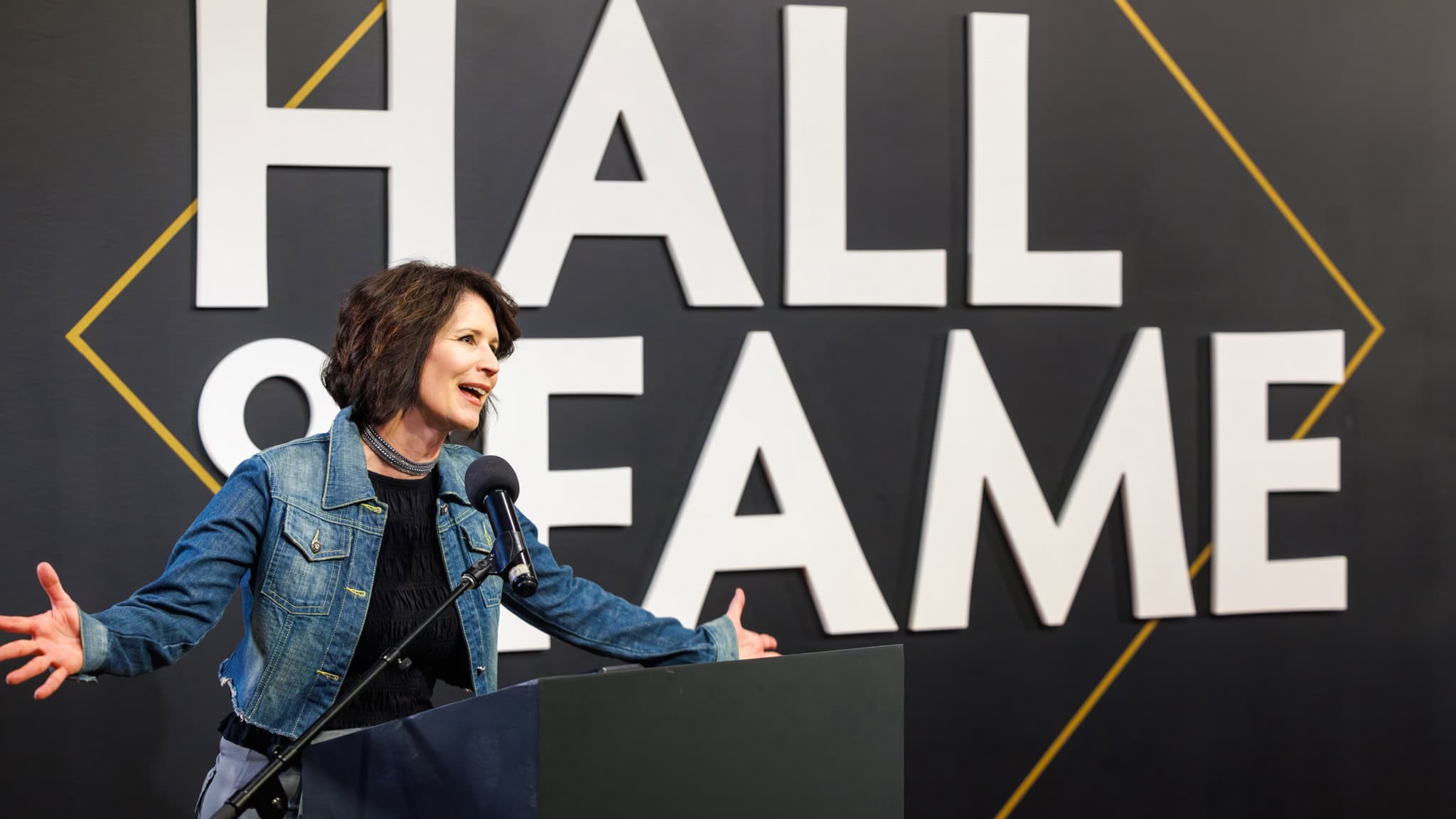
Long before Lisa Brokop was inducted into the Canadian Country Music Hall of Fame, she was a 12-year-old country music fan in British Columbia, listening to the radio, writing her own songs, and dreaming of Nashville.
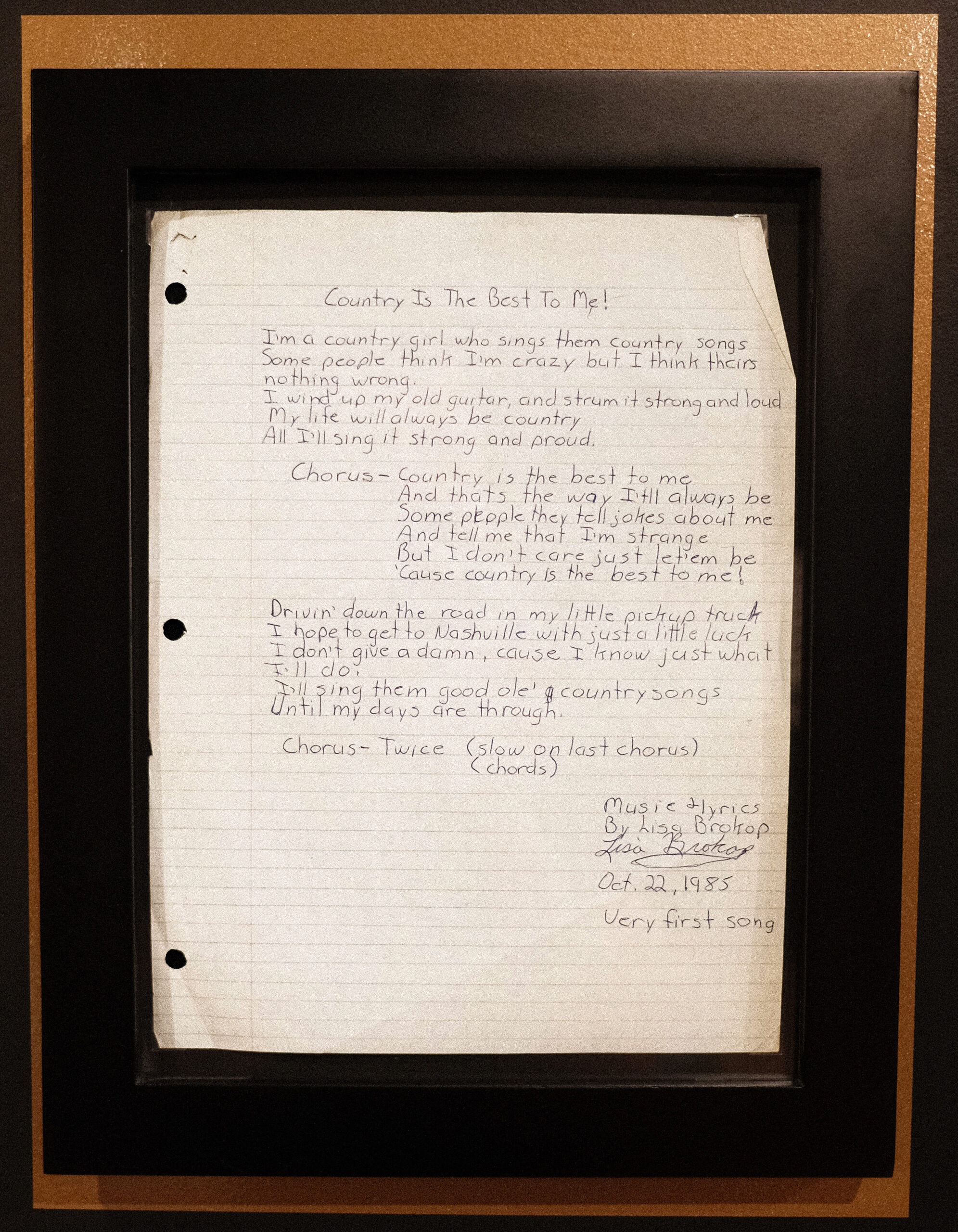
One of those childhood songs, “Country is the Best to Me!,” hangs on the wall as handwritten lyrics alongside memorabilia from her four-decade career in the Canadian Country Music Hall of Fame exhibition at Studio Bell, home of the National Music Centre, following her 2025 induction.
Since attending her very first CCMA Awards as a teenager and meeting one of her heroes, Michelle Wright, Brokop’s journey has come full circle. She is now a four-time CCMA Award winner herself, standing beside Wright as a friend and fellow hall of famer.
Looking up to country icons gave her the roadmap for her own dreams. Performing with her family at age seven and sitting in with local bands by age 15, she grew up singing the classics — a tradition she continues today.
Brokop and her husband, Paul Jefferson, bring legends to life on stage with The Patsy Cline Project and Hank Lives. As The Girls, she collaborates with Canadian country powerhouses Patricia Conroy and Beverley Mahood. Through her touring show The Legendary Ladies of Country Music, she celebrates the trailblazing women who led the way.
On record, she pays homage to history with albums such as The Patsy Cline Project and Who’s Gonna Fill Their Heels? while writing her own story across a catalogue of more than 10 studio albums, including her new faith-based release, The God I Know.
Looking back on it all, Brokop reflects on the people who helped shape her path — the musical family who supported her, the artists who inspired her, and the friends she made along the way — and what it means to find her place in country music history.
You started your music career at a very young age. How did growing up playing music shape the person and artist you became?
I can’t remember ever not doing music of some sort. My mom said I always had this kind of big voice and I guess before I could speak, I would just kind of cry and scream, and she couldn’t wait till I put it into words. And then I would just sing in the bathtub or on my swing set, and she realized I had something a little bit special. I just always loved to sing. My first time singing in front of a group of people was, I think it was Canada Day, at a campsite with family, and I was very, very, very shy up to that point. But my mom knew I could sing. And she’s like, “Hey, why don’t you sing the national anthem?” I didn’t want to, but she knew I could do it. And I sang and it was all going well until the last note, and my voice cracked. I was so embarrassed, but the people applauded and clapped, and I was like, “Oh, I kind of like that.” So I think that’s what hooked me in, even with the voice crack. It’s like, “OK, I’m still shy, but I can do this, so I’m gonna do it.”

In your exhibition at the National Music Centre, there are handwritten lyrics for the very first song you wrote when you were 12 years old, “Country is the Best to Me!” Do you remember what you were feeling when you wrote it?
I was 12, and I was always listening to the radio. And those were my teachers, listening to those songs and listening to the people and wondering how they wrote them. I guess I understood the structure of a song and I thought, “Well, I’m going to try to write one like they do.” And so I just wrote about what I knew, which was my love of music and my desire to go to Nashville, and also being a kid at school who liked country music when none of the other kids did. They liked whatever heavy metal music or rock ‘n’ roll or whatever they were listening to, so I was kind of the odd kid out. But I just didn’t seem to care. Ricky Skaggs was the first concert I ever went to, and I probably got a T-shirt and wore that to school. I just loved country music.
Who were some of the artists you looked up to when you were young, and how did they inspire you to pursue a career in country music?
I loved Kenny Rogers. I remember having a cassette tape of his greatest hits album, and I loved Dottie West. She sang on a lot of those songs with him, and that’s probably how I got to know her. I loved that rich sound of her voice. I had a low voice also, so I felt like I wanted to sing like her. And I loved watching the Barbara Mandrell show every Friday night. She also had a voice like that, that was kind of low and rich. And I just thought she was awesome, and that show was great. The Nashville Network was really popular then, and I loved to watch Ralph Emery’s show. I found out that Nashville was the place where the country music singers went, and my mom had probably told me about it too. So I just had that goal in mind from as early as I can remember.
Do you remember the first time you attended the CCMA Awards?
The first one, I guess, would have been Vancouver, because that’s where I’m from, and I was around 14. My mom and dad and I went. I was starting to sing and do a few things locally and I had that aspiration to be in the business. It was told to us, “You should go to the CCMAs and take part in all the seminars and the different things.” So we did. And then it was so funny, we got the delegate pass and you put your name in a draw for a trip to the following year — and I won. So we went, and I guess it was meant to be. From then on, I just kept going year after year and eventually got nominated and did all the things. I was in full swing.
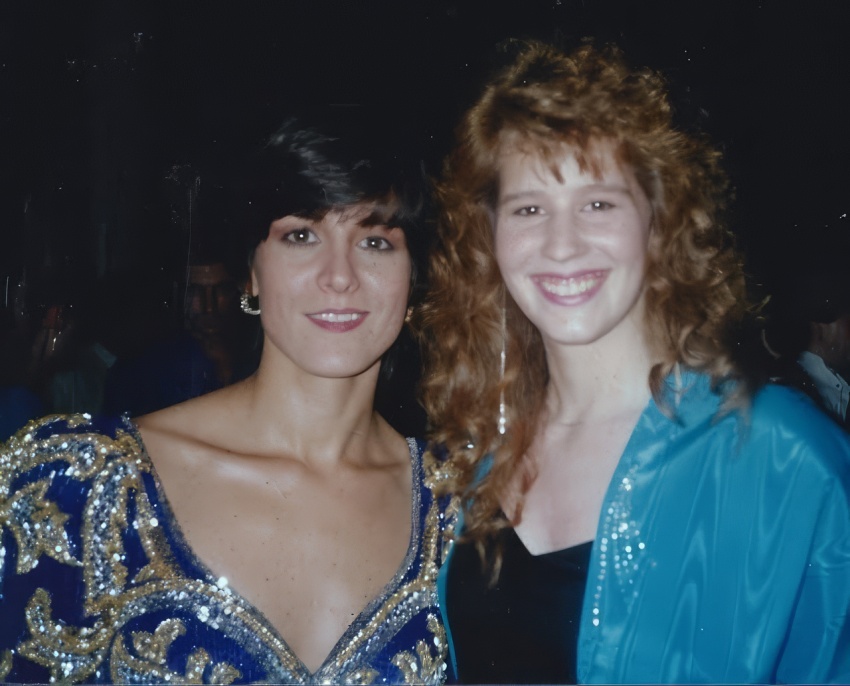
I loved Michelle Wright. She was at the top of her career at that point, and she had the catsuits and the fancy jackets and her cute short haircut. And I remember standing in line to get her autograph — you’d have those programs, and I think I got a whole bunch of autographs that year. But hers, I just remember that specifically, because that’s who I wanted to be. I wanted to do what she was doing. And it’s so funny because now, it came full circle, and we’re friends, and we’re both in the Hall of Fame. She was one of the people that called me when I got the word that I was going to be inducted, and it was just like, “Wow, that’s really cool.” I still admire her and look up to her, and she’s still doing amazing things after all these years. And she is tough. She’s strong, and she was one of the first to go after the Nashville thing and get the record deal and all that stuff.
You were born and raised in B.C. but spent most of your career in Nashville. What was it like to come back to your home province for your induction into the Hall of Fame?
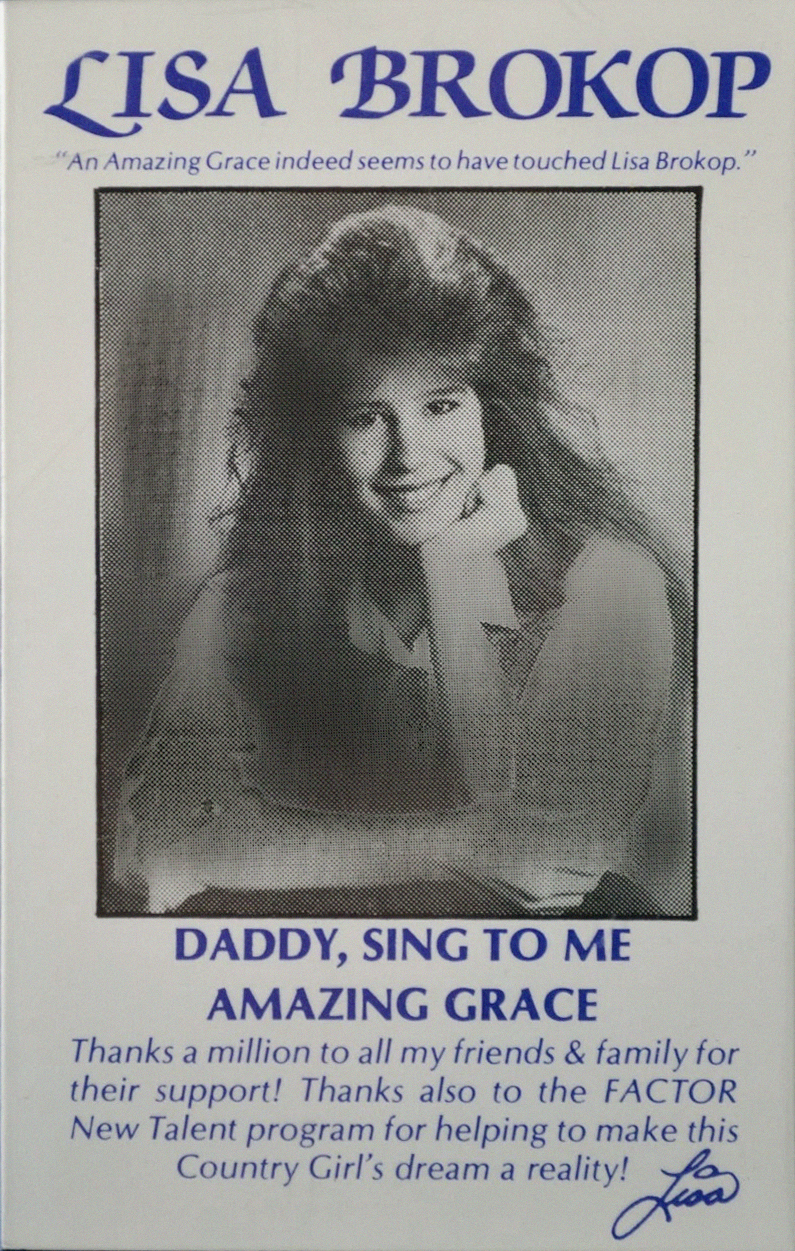
I was so happy that it was in Kelowna because I love that part of the country. We always took family trips up into that area. My father passed away a few weeks ago, so it’s extra special that my parents got to be there and see the induction. And I know that he was very proud. It was kind of an accomplishment for all of us because they were very much a part of my career and being in the music business. I was a minor, I was just a youngster when I started, so they were taking care of things. My mom ran my fan club and she actually did the tracking on my very first single, calling up the radio stations to see if they would play the song. She did that for me when I was 16 and my first single was “Daddy, Sing to Me.” She’d get up super early on the West Coast so that she could talk to the people on the East Coast and tell them about her daughter who had this song, and we got quite a bit of airplay.

When you’re standing in the Canadian Country Music Hall of Fame exhibition and looking at items from your career — from your first song to the movie poster for Harmony Cats and even your wedding dress — what memories come to mind?
It was surreal. I didn’t realize how much was going to go through my mind and all the memories. It’s like 40 years of making records, being on the road, the stories with the band. Those were the things that came up the most, and I guess those are the most important things — just the relationships that you make as you go along, and the funny stories that would happen on the road that nobody thought was funny except us, because we’re out there in this strange reality, being on the road. Riding on a bus with 10 people through the night and airports and backstage shenanigans and all the crazy things that we did. And then the wedding dress, I loved that because, of course, I got married in the dress, but I also used it for a music video and for an album cover, which is so music-business-like, “Let’s get the most out of this dress.” My favourite thing, though, is the lyric from the first song, because that was so from the heart. I didn’t know anything, I just wrote what I knew. So from that to now having all of those memories and things, it’s pretty wild.

Through your albums The Patsy Cline Project and Who’s Gonna Fill Their Heels?, and your live shows like The Legendary Ladies of Country Music, you celebrate the women who paved the way. Why has preserving those stories and songs become so important to you?
I love those songs. That’s the music I grew up on. When I was first getting started, I would follow the local bands around town, and sometimes they would do an afternoon with the radio station — they called it a road show — and they’d set up at a car dealership or something like that. I’d listen on the radio, “Oh, they’re going to be at such and such,” and I would go, and I’d ask them if I could sit in and do a song. I would sing a Patsy Cline song or Tammy Wynette or something like that, because that’s what everybody knew. So that’s how I cut my teeth and I learned how to sing with a band and got a lot of experience with those songs. I’ve been doing this so long, and we’re constantly trying to reinvent ourselves, and it just made sense to go back to my roots and do something real and honest. For me, that’s the music I started with, it’s the music I love. I really enjoy doing those shows. I always say that Patsy Cline is such a singer’s singer, she’s an artist with a voice that is so pure and untouched.
The title track “Who’s Gonna Fill Their Heels?” asks a pretty big question. What does “filling their heels” mean to you?
I guess it has to be different for everybody. It’s sad as we lose more and more of our great ladies — Dolly just passed away, that was so sad for everybody. I think it’s important to remember what they did, remember their music, keep performing their songs. There’s so much coming at us with the internet now. But I think there’s a foundation that is important for all of us that I would love to keep alive with those songs and the simplicity of a lot of them. A lot of it was about sheer grit and strength and courage. They rode around in cars, very uncomfortably, I imagine, with a whole bunch of people just to make ends meet. It’s tough for everybody, but it was probably really tough for women back then. They were out there on their own, they might have had a manager, but it probably wasn’t a female who understood the things that they were going through. They had to be tough and just push their way through. And I can imagine Patsy Cline — I would have loved to sit down and have a shot of whiskey with her — she would be like, “Here’s how it is, and this is what we’re doing.”
It isn’t just a tribute album of classic songs — you also brought your own songwriting into the project. What was the process behind writing songs for the album?
I felt like I needed to put a little bit of my own creativity in it. I didn’t want to be a copycat, like just using all their music to elevate my own career. I wanted to honour them, but also add what I had — not that I could ever write a song like “Crazy” or “She’s Got You,” but maybe something along those lines. And so I wrote a song with Jefferson Ross called “Careless Me.” And I just love it because I feel like I could hear Patsy singing that song. If we had been around back in those days, we might have been able to get her that song and maybe she would have recorded it. It was a fun thing to do, and a great way for me to use my creativity in a different way.
Were there obstacles you faced in your career as a country artist, and especially as a female artist?
I didn’t really notice those obstacles as a woman, maybe I was lucky or maybe other people were shielding me from that. I was lucky to be around in the ’90s when there were lots of women getting a lot of airplay — Shania and Trisha Yearwood and Lee Ann Womack and the list goes on and on. So I got to be a part of that era, which is really cool. Now we’ve gone into a place where music becomes more about advertising instead of what people want to hear. That makes it hard for everybody, but I think especially for women. I’ve heard people say, “Well, women don’t sell records and women don’t buy other women’s music,” and it’s like, “Well, if you don’t give them a chance to, then yeah.” I loved Barbara Mandrell and Dottie West, and I bought their records. I don’t think people are that much different today. We all look for people to look up to, to follow, to admire. I love the guys, too, don’t get me wrong, but it sure would be nice to see a few more women in there.
Now that you’re in the Hall of Fame, what advice would you give to your 12-year-old self or other young musicians who might look up to you the way you looked up to your heroes back then?
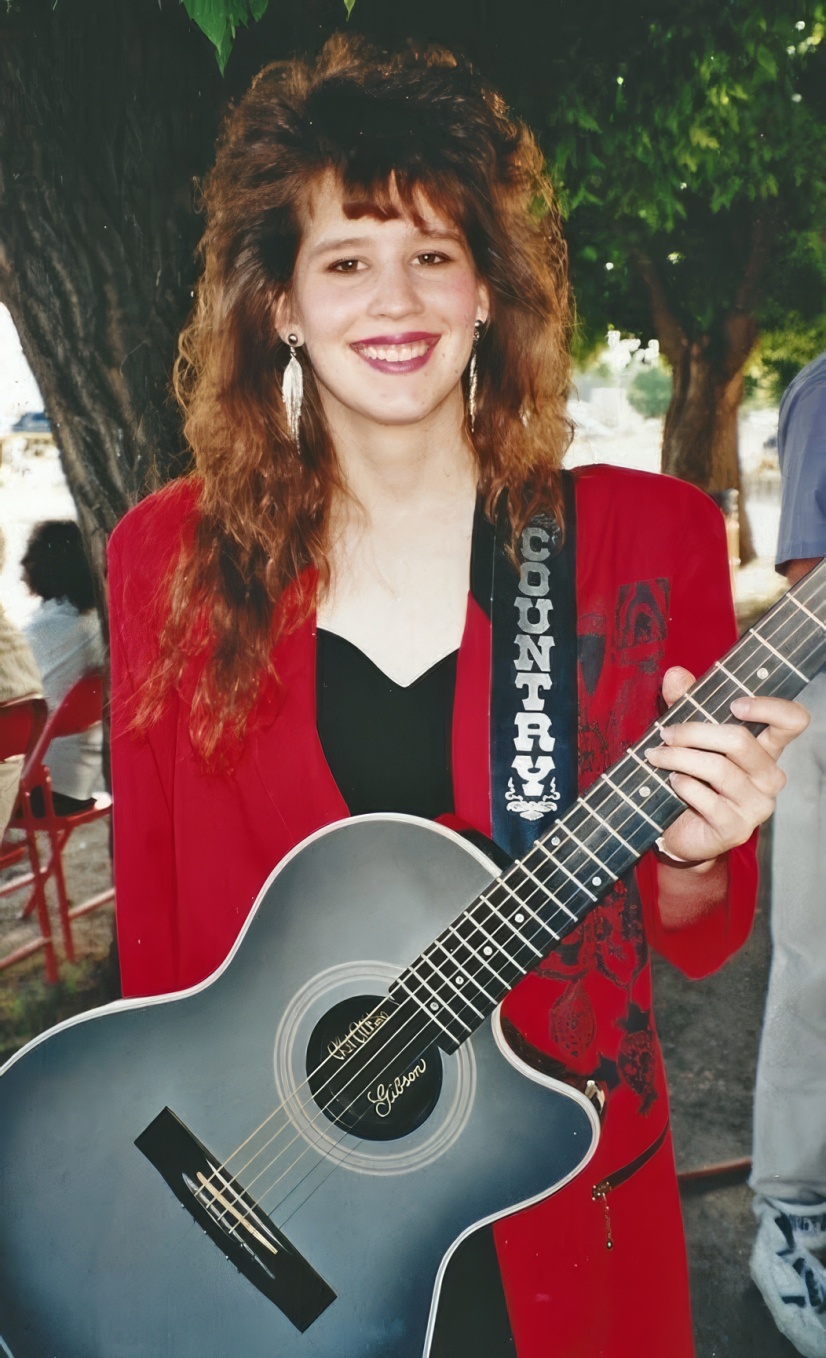
My biggest hope is that young people would maybe see something in me and go, “OK, I’d like to do that.” I would say don’t be in too much of a hurry. I started super young — I don’t regret anything and I got to do so many cool things — but I missed out on some of the normal things that kids are supposed to do. You need to be a kid, you need to be a regular teenager. Stay in school, learn everything you can, gather up all the information you can so that you’ve got a great foundation, a good head on your shoulders, and you can make decisions that are good for you and not necessarily ones that somebody else told you to make. You really need to figure out who you are and when you’re 12, you don’t know. I mean, some days I’m still not sure. It takes a long time and you want to learn from other people all the while still being true to those pieces of who you are. You want to get to know those things about yourself before somebody else comes in and says, “No, you’re going to do it this way.”

Amanda Wilkinson, who is being inducted this year as part of The Wilkinsons, has joined you on The Legendary Ladies of Country Music tour. What’s it like to watch a woman you’ve shared the stage with receive that recognition and see the torch continue to be passed forward?
I’m so excited for her and so happy for her. She is an amazing vocalist, like she’s one of the greatest that Canada has. And getting to tour with her, every night she would just bring the house down. Of course she had her hit song “26 Cents,” but she would also sing “Crying,” the Roy Orbison song. And boy, every night was like, “Wow, she just killed it.” She’s such a sweet, kind, genuine person. She started young like me, so I really relate to her. She’s probably got lots of stories and good advice for what to do and what not to do. We’ve chatted about things like that, and it’s been fun to compare notes. We went through a lot of the same things, doing music at a young age, but we still had to figure out who we were underneath all those things as well. And we’re probably still figuring it out.
Lisa Brokop’s exhibit in the Canadian Country Music Hall of Fame will be on display at Studio Bell, home of the National Music Centre, in Calgary until October 13, 2026.