
Raspy. Raw. All-powerful. When Amanda Marshall‘s name is mentioned, the talk is all about that voice. Those pipes are what led a U.S. record label to sign the Canadian when she was still a teen. And, three decades on, it’s that voice that still resonates.
Born and raised in Toronto, Marshall’s childhood home was filled with music. From Barbra Streisand and Aretha Franklin to the Rolling Stones and AC/DC, she soaked up everything and dreamed that one day someone, somewhere, might hear her voice on the radio.
That dream was kickstarted in the early 1990s when a backstage meeting with Jeff Healey following one of his gigs led the bluesman to take Marshall, then 17, on the road as his opening act. When the artist arrived back in her hometown following this tour, the buzz surrounding the big-voiced singer with a bravado and stage presence to match was palpable.
By the time Marshall was ready to record her major-label debut, she was a regular on the Toronto club circuit. Before she was of legal age to enter the storied establishments she played, such as the legendary Horseshoe Tavern, she sold out shows in these bars.
Released on Epic/Sony in Canada in October of 1995—and stateside the following spring—Marshall’s self-titled debut eclipsed the hype thanks to her label’s relentless marketing and that powerful voice. The record hit No. 4 on the RPM Albums Chart domestically, producing seven Top 10 singles and a JUNO Award nomination. It is one of only 18 Canadian albums to ever achieve Diamond status for sales of more than 1 million copies. Endless touring in the year following its Canadian release led to gold and/or platinum sales in 15 more countries, including Norway, where it hit number one.
While Marshall’s deep, soulful voice and limitless range were what first attracted listeners, the songs she penned, along with the compositions she co-wrote, confirmed that the artist was, and still is, much more than another barroom singer. Upon the record’s release in the United States, a St. Louis Dispatch reviewer called Marshall “a lady in waiting,” while a critic for The Dayton Daily News concluded his assessment of the self-titled debut saying, “by the end you’re convinced that Amanda is someone to watch.”
Heading to Los Angeles
With carefully curated arrangements that put Marshall’s voice up front in the mix, fellow Canadian David Tyson produced the debut. Most of the tracks were laid down in Los Angeles. Tyson (who co-wrote Alannah Myles’ 1990 No. 1 Billboard hit “Black Velvet” with Christopher Ward) assembled an all-star group of seasoned musicians to back up Marshall for these studio sessions, including drummer Kenny Aronoff, bassist Leland Sklar, and guitarist Tim Pierce.
Since its release in 1996, Marshall put out two more multi-platinum records: Tuesday’s Child (1999) and Everybody’s Got a Story (2001); then, she took what is now a well-documented two-decade exodus from the music industry due to a lengthy legal battle with her ex-manager. In 2023, Marshall made a successful return with the release of Heavy Lifting, which won the songwriter her first JUNO.
On July 17, Marshall released a deluxe edition of Heavy Lifting that includes three new songs. This November, Marshall and her band hit the road for The Dirty 30 Tour: Pearl Celebration, Diamond Legacy—a monthlong cross-Canada jaunt that starts in Alberta and ends in Nova Scotia.
For the latest Record Rewind, NMC Amplify caught up with Marshall to reflect on this milestone and dig deeper into the inspiration for—and the circumstances behind—a handful of these songs, which, just like one’s children, have matured in the ensuing decades and touched so many lives.
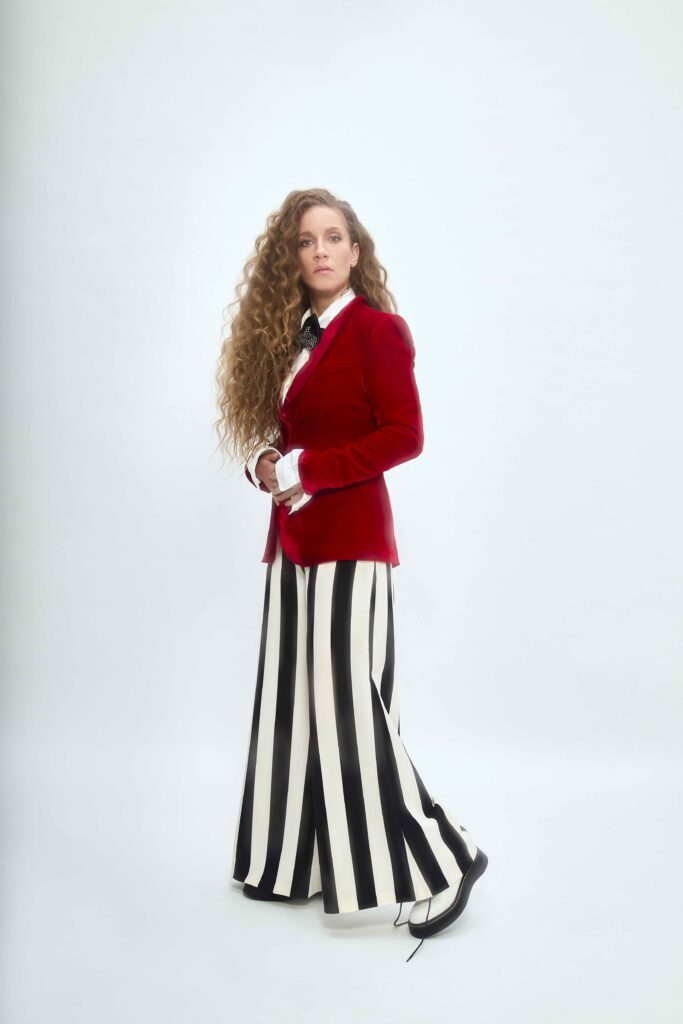
It’s been 30 years since you released this self-titled debut. Start there. Is hitting that milestone hard to believe?
It really is. The 30 years snuck up on me, especially because I was absent from the music business for almost two decades. When I returned in 2023, my band and I went on the road and it was just around the time of the record’s 25th anniversary, but because of COVID that time got blurry. The last five years just flew by and all of a sudden we hit the 30th anniversary.
This record has sold millions of copies worldwide. The 10 songs continue to connect and resonate with audiences, new and old. Three decades on, what are your general thoughts on this debut?
It’s funny; this record, for me, really has been two halves of a whole. There was the first time when I was just starting out and now, with this comeback and playing live the last few years, where I’ve got to relive those songs and see for the first time how this material connected with so many people. I know that sounds strange, but this is the first time I’m really getting to see how connected and how meaningful these songs are to people. When I played them the first time around, I was insulated by this huge infrastructure that sprung up around me out of necessity…there were people all around me all the time. That acted as a bubble and prevented me a bit from connecting directly with people and seeing how connected they were with this material.
So playing these songs today versus 30 years ago, you feel more connected to both the songs and to the audience?
Yes. This time around, I have been able to see what these songs represent for people…they are like old friends. They have been to births, deaths, funerals, weddings, and graduations. They really mean something to people, and that is incredibly gratifying.
When you entered the studio to choose and to record these songs, obviously you had no idea how people would react and whether these works of art would still resonate and be touchstones in so many people’s lives 30 years later, but that’s an incredible feeling I imagine. Not all artists are so fortunate to have a body of work that stands the test of time.
It is amazing! I get asked a lot about whether or not having put out new music makes putting the set list together difficult or if it’s a disappointment because people want to hear “Birmingham” and “Dark Horse” instead of some of my newer songs. I don’t understand that line of thinking because these are my songs. It’s not like I’m being asked to sing somebody else’s songs. They’re mine and I am incredibly lucky to have a body of work that has held up and that people want to hear. I’m always incredibly conscious of that fact, so it is not difficult for me to sing these songs live and play the songs people want to hear.
Digging deeper into the record and to specific songs, let’s start with “Let It Rain.” The album’s first single and lead-off track is your most successful international hit—reaching number three in Norway and eclipsing the Top 30 in Australia and New Zealand. How did you discover this song written by Kristen Hall and how did it find its way onto the record?
Kristen, whom I have actually still never met, is a very gifted American singer-songwriter. That song came to me as a demo from my label. I was living in Burbank, California in a crappy little furnished apartment. I was getting ready to make this record, but we hadn’t begun yet. I got sent a demo of this song on a little cassette and I really liked it, but then promptly lost the demo and forgot all about it once we started recording.
How did this lost and forgotten demo resurface to become the lead single?
We made the whole record knowing that song existed, but I had forgotten all about the demo. Towards the end of our time in the studio, the label was considering releasing “Birmingham” as the first single, but just as we were tidying up, they asked whether there was anything else we needed to record. Somebody said, ‘What about that rain song?’ and I was like, ‘Yeah that’s a great song!’ So we reached out to the publisher and they resent the demo. We recorded it incredibly fast; it was the last song we recorded and it became the album’s first single, which just goes to show, you never really know.
You had quite an all-star group of musicians on this record, including renowned drummer Kenny Aronoff. Did you know Kenny or was it your label or producer who suggested him?
I was a huge fan of Kenny’s, but getting him to play on the record was due to the label and to David [Tyson] who I believe had previously worked with him. I’ve told this story before, but the first day Kenny came into the studio, he immediately said to me, ‘You’re from Canada. I love Canada!’ He told me he’d done some work with Corey Hart, but the Canadian artist he really loved was Gino Vannelli. I’m also a huge Gino Vannelli fan, so we spent a whole afternoon just singing Gino’s songs while Dave kept trying to get us to focus and work on the actual record.
Many of these songs were either written by or co-written with some talented homegrown artists, including producer David Tyson, 2023 Canadian Songwriters Hall of Fame inductee Marc Jordan (“Fall from Grace,” “Promises”), Dean McTaggart (“Dark Horse”), and Christopher Ward (“Let’s Get Lost”). How did you meet these collaborators?
I met Chris fleetingly through the years doing different things with MuchMusic because I was touring with Jeff Healey for a period of time before I ever had a record out. I was meeting a lot of people then, but the bulk of my co-writers on this record like Dean, Chris, and Marc, were part of this group of Canadian expats living in Los Angeles who all knew each other. I found the two songs from Marc, “Promises” and “Fall from Grace” because I had seen him play them in Toronto at one of his gigs and I loved those songs. The album version of “Fall from Grace” was very different than Marc’s original. His version was much more of a mid-tempo ballad.
What attracted you to “Promises”?
“Promises” is another one I had seen Marc play live and after hearing it for the first time, I had a visceral reaction. It was in the wake of the Rodney King verdict. It was a heightened time. That song really hit me and I wanted to record it.
How did you meet Chris Ward?
I met him either through Dean [McTaggart] or Dave [Tyson] in Toronto as they were just coming off the success of Alannah Myles’ “Black Velvet,” so they were really tight and had already worked together. Chris and I really hit it off. We struck up a friendship and hung out a lot during that time. He had just gotten a new German Shepherd puppy and I would go to his house, play with the dog, and write songs. They were all part of a group of people that came into the studio with me with the intention of making a record…everybody just started pitching in.
It’s a tough question for many artists to answer, but do you have a personal favourite on this record?
“Dark Horse.” I’m really proud of that song. It was my first big grown-up songwriting session with Dean McTaggart. I wrote the second verse and brought it to Dave [Tyson] and Dean. It was probably the closest fictionalized version of my own personal experience. I had just moved out of my parents’ house and I was living with my boyfriend and they didn’t approve. I was trying to capture that time in your life where you’re really trying to separate yourself from your parents and chart your own path.
What about “Birmingham”?
I have a fraught relationship with that one. I really love that song, but the album version is much more constrained and different than the way we’ve always played it live. Once you start to play a song live, it will usually tell you how it’s meant to sound. The version we play live is funkier and more up-tempo. But, what I love about the album version is the duality between that 808 hip-hop drum and this weird, jazz-like piano riff. Then, the lyric makes it almost feel like a country song…it really is a mix of genres with different intentions. Vocally, when I listen to the album version of that song now, it sounds like it was the first or second time I had sung it, so I didn’t really have a full handle on the song yet. It also sounds like a completely different version of me. Still, that song has always been a joy to perform live.
This fall you hit the road for a cross-Canada tour that begins in Cold Lake, Alberta on November 6 and ends December 11 in Halifax, Nova Scotia to celebrate the album’s 30th anniversary. What’s it like to revisit these songs live with your band, connecting with your audience, and curating a set list that mixes old favourites from this debut with new songs?
I am a big believer in playing the songs people want to hear. All artists get bored, that’s part of being a creative person, but the trick is if you know the material and if the audience trusts you, you can improvise in a way that will keep both of you engaged.
Record Fast Facts:
Album: Amanda Marshall
Labels: Sony/Epic
Release dates: October 17, 1995 in Canada, 1996 in the U.S.
Studio(s): House of Blues Studios, Lavender Cottage, Pacific Studios, Sony Music Studios, Zi Studios
Producer: David Tyson
Sales: Diamond in Canada (sales of more than 1 million); 350,000 copies in the U.S.; and eclipsed more than 2 million globally
Charts: Peaked at No. 4 on the Canadian RPM charts

Tracks
1. Let It Rain
2. Birmingham
3. Fall From Grace
4. Dark Horse
5. Beautiful Goodbye
6. Sitting on Top of the World
7. Last Exit to Eden
8. Trust Me (This is Love)
9. Let’s Get Lost
10. Promises