
Kreesha Turner didn’t want “Don’t Call Me Baby” on her debut album. The Edmonton singer had recorded more than 40 songs for Passion, and the label wanted about 10. There was another track she loved that management was lukewarm on, so she proposed a trade: drop “Don’t Call Me Baby” and keep hers.
“Oh, no, I hated it,” Turner tells me over Zoom, recalling her first impression of the song. “If it was up to me, I would have cut it.”
Her manager at the time, Chris Smith, whose roster included Nelly Furtado and The Philosopher Kings, shut the idea down fast. “He was like, ‘Are you crazy? This record’s a hit,'” she says. “And I was like, okay.”
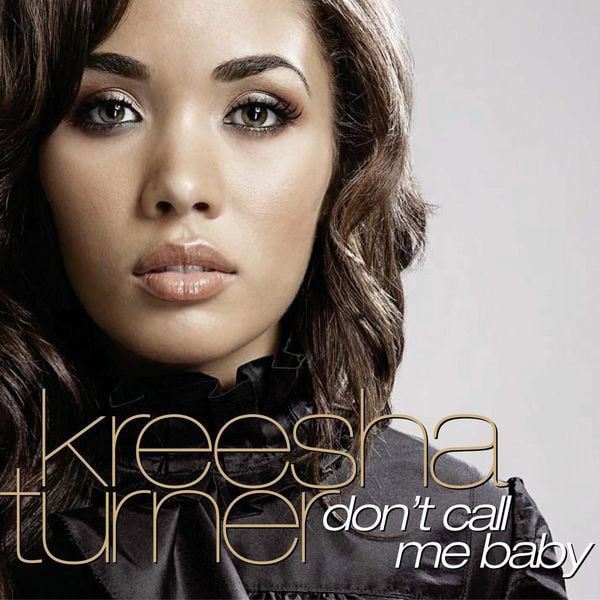
He was right. Released in Canada in May 2008 as the third single from her debut album, Passion, the song peaked at No. 8 on the Canadian Hot 100 and topped Billboard’s Canada AC chart. It crossed the border, too, climbing all the way to No. 1 on Billboard’s Hot Dance Club Play chart. Nearly two decades later, fans still tell her it was the soundtrack to their high school years.
“There are people in the industry who can tell a hit. I’m not one of them,” she tells me. “I just know what I like.”
It’s a telling admission from someone whose life has so often turned on other people’s verdicts. A neighbour decided she couldn’t sing. Her mother decided where she would finish high school. A manager decided which song would make her famous, and two rounds of label politics decided which ones the world would never hear. But the true story of “Don’t Call Me Baby” is also the story of how long it took Turner to get the final say.
I wanted to start at the beginning, with something I’d read about THE Kreesha Turner: that as a kid, she was convinced she couldn’t sing. The first verdict, it turns out, came over a fence. Turner grew up a creative kid in Edmonton, singing constantly, until one day she stopped. She only pieced together why a few years ago, when her father asked her about it. At four or five, she was singing outside when a teenager a few houses down yelled at her to stop.
“Damien was his name,” she says. “He was screaming at me from across the fences, like, ‘Shut up, you sound horrible.’ And from that day, at five years old, I was so traumatized and heartbroken. I stopped singing.”
She believed him for a decade, and even when her family told her she could sing, she wrote them off as biased.
Music stayed in her life, just sideways. As a kid, Turner was obsessed with Oscar Peterson. His records, she figured, made perfect tap-dancing music, and she decided she’d grow up to be a jazz pianist. But nobody would teach a kid jazz without classical training first, so she sat through Edmonton Suzuki Piano lessons and went to war with her teachers.
“The complaint was like, ‘She tries to jazzify everything,’” she says, laughing. She quit around 11, and at Victoria School of the Arts, she went for dance and visual art instead.
Then, at 14, she got into trouble, and her mother sent her to live in Jamaica.
“For all the immigrant parents who threatened to deport their kids,” Turner says, “my mom was the only one that actually did it.”
In Jamaica, she says, everybody sings. And like so many artists, she got her head start in church. When friends pushed her toward the youth choir at Faith Tabernacle in Portmore, she told them she didn’t sing. They asked if she knew the Canadian national anthem. She did, and that was her audition. After a few months on probation, she finally sang with the choir in front of the Pentecostal congregation, the kind with tambourines and people running up the aisles. Just like that, the verdict she’d carried since she was five fell apart.
“My whole life, I was a dancer. I was the reaction to this music,” she says. “And for the first time in my life, I was the action creating this reaction from the audience. It shifted my understanding of the power of music.”
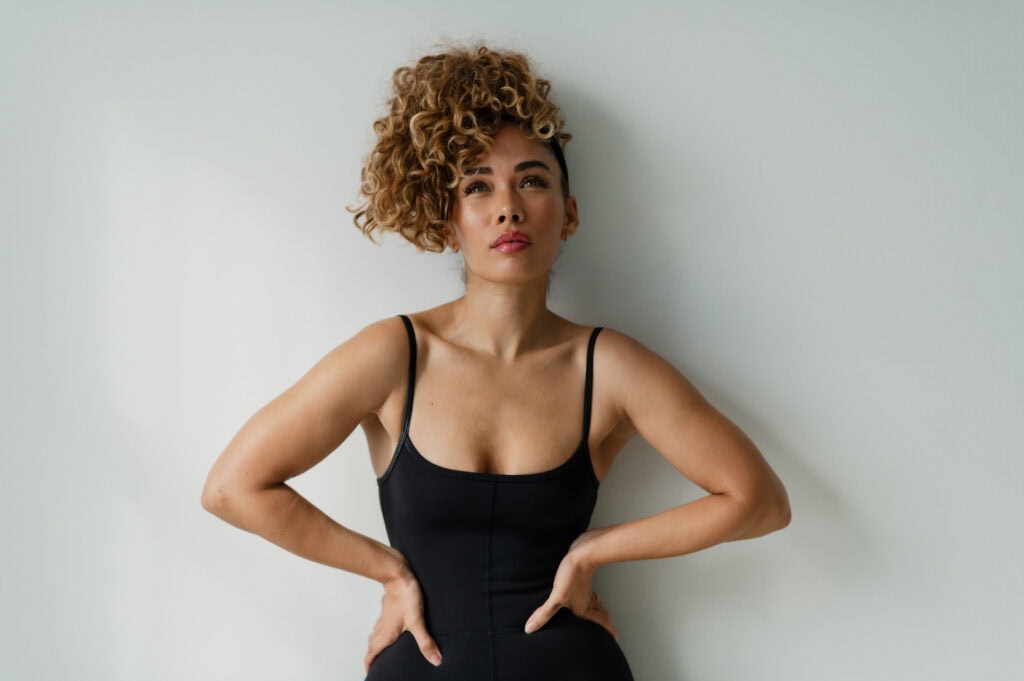
Back in Edmonton, Turner sang anywhere and everywhere that would have her, and after graduating in 2003, she threw herself into the city’s busy urban and hip-hop scene. Her mother, who arrived in Canada living at the YWCA and built an industrial engraving business, gave her one condition.
“She was like, if you are going to do this, you need to treat it like any other job,” Turner says. “Who am I to tell you that you can’t accomplish the impossible when I feel like I accomplished it myself?”
So she made it a full-time job. She sang in jazz and gospel choirs, did musical theatre at The Citadel, wrote her own songs and opened for major acts like De La Soul and Chris Brown. In 2005 she won the inaugural singing competition run by Edmonton’s 91.7 The Bounce (now officially rebranded as KiSS 91.7). The prize was three recorded songs, and one of them, “Bounce with Me,” went into heavy rotation on the station. Her mother hired radio promoters to take it national, and the single charted across Canada before landing syncs on iconic TV shows like Gossip Girl and Ugly Betty.
She can still run the timeline from memory: the competition in June 2005, a management deal with Chris Smith that December, then a deal with Virgin Records in New York in April 2006, with EMI Canada following.
“So I was 20,” she says. “He [Chris Smith] told me, ‘I meet beautiful, talented people every day,'” she says of Smith. “‘The reason I am signing you is because of how active I saw that you were.'”
Smith had bet on her work ethic. His next bet was on a song that, at that point, wasn’t even hers.
“Don’t Call Me Baby” started out as “Don’t Call Me Angie.” Jon Levine, the former Philosopher Kings keyboardist who would go on to executive produce Turner’s debut album, Passion, had been working on it with songwriter Anjulie Persaud, who already had a demo.
“Management loved it,” Turner tells me. “But obviously my name is not Angie. So we took it and we changed it to ‘Don’t Call Me Baby.'”
She re-recorded Persaud’s demo, and the label lined it up behind a re-release of “Bounce with Me” and a second single, “Simple.” Once it hit radio, the weekly add reports kept getting better.
“The next thing you know, you break 100. Next thing you know, you break 50. Next thing you know, you’re still climbing,” she says. “There were just so many cool things going on at the time that I really didn’t even have the opportunity to think.”
Pressure turned out to be the least of it. Behind the scenes, the American half of her career was coming apart. Turner had been signed by Jason Flom, then head of Virgin Records and the same executive who signed Katy Perry, and for a stretch, she says, the two of them were EMI’s global priorities. Then the ground shifted. Perry’s breakout single, “I Kissed a Girl,” had just hit, and with Turner’s U.S. release still six months out, Flom was fired. She was then absorbed into Capitol Records, which decided to wait and see how things went in Canada.
Canada went about as well as it could. Turner says the song held No. 1 on AC for eight weeks organically, and she landed on the covers of five Canadian magazines. Capitol Records still passed.
“People are advocates for who they sign,” she says. “Katy Perry’s trajectory had already [taken off] before [Flom] got fired, so the machine was going to keep going. The thing that kind of screwed me over was that my release hadn’t happened before he was axed.”
It was part of why she eventually stepped back from music, she tells me. Then it happened again. In 2015, she signed with Republic Records in the U.S., moved to New York and recorded a reggae-leaning project. The first single, featuring Jamaican-American singer Shaggy, was ready to go, but it got held up past the holidays. Then Rihanna released “Work” in January 2016, Drake followed with “One Dance” that April, and suddenly the sound and genre she’d built her record around belonged to two of the biggest stars on the planet. Next to them, a modest marketing plan looked like a bad bet.
“If we’re about to go compete with f*cking Rihanna — pardon my French — you need to quadruple it,” she remembers telling the label. They shelved the project instead.
Her mother had promised that hard work would carry her. Twice now, it hadn’t. “I don’t hold the keys to my destiny,” Turner tells me. “If I’m signed to a major label, it’s really just the executives and the politics and the decisions that they make.”
So she walked away and went looking for something she could control. Her last release of that period was “Sexy Gal.” She admits parts of the decade that followed sound “so random” — a run as Stock Bae, livestreaming her day trades and teaching financial literacy online, brand deals through social media, and a tour merch manufacturing and logistics company.
“When I was in this entrepreneurial space, I felt like I had regained the control of my destiny,” she tells me.
In 2023, she and her business partner lost more than $600,000 to a corporate fraud scheme, and she filed for bankruptcy. “Now I just realize how the universe humbled me,” she says. She left for Southeast Asia in 2024 with a small trading account to live on. In Bali, drawn in by the island’s busy art scene, she started performing again.
“The universe kind of forced me back into it,” she says.

This time, nobody gets to overrule her. Turner is working on a new album built on the jazz instincts that got her in trouble, first with her piano teachers and later with the people who made Passion.
“They would always basically have to beat me out of it,” she says of her phrasing and timing on that first record. Now those instincts are the foundation. For the first time, she’s writing every song on this new project herself, working with executive producer Ari Mastoras and a band of Edmonton jazz players. She calls it neo-jazz — neo-soul vocals, with Erykah Badu as a north star, over jazz arrangements.
“I am a hybrid. I am a Canadian Jamaican,” she says. “For me to make hybrid music is actually the most authentic thing.” Doing it alone as a writer scared her. “If nobody likes it,” she says, “I have nobody to blame but myself.”
Which brings her back to the song she tried to throw away. I ask what “Don’t Call Me Baby” would sound like if she could put it out today, in 2026. She points to her voice, which has matured over two decades, and to everything she has lived through since.
“Would my delivery be different? Absolutely,” she says. “But there’s just something that I feel is really, really classic about ‘Don’t Call Me Baby.’ I didn’t understand then why people liked it so much. I understand now.”
She still says she can’t spot a hit. This time, she isn’t asking anyone else to pick one for her.
Kreesha Turner is one of 10 Alberta-based musicians chosen for NMC Artist Mini-Residencies, in celebration of National Music Centre’s 10-year anniversary.